
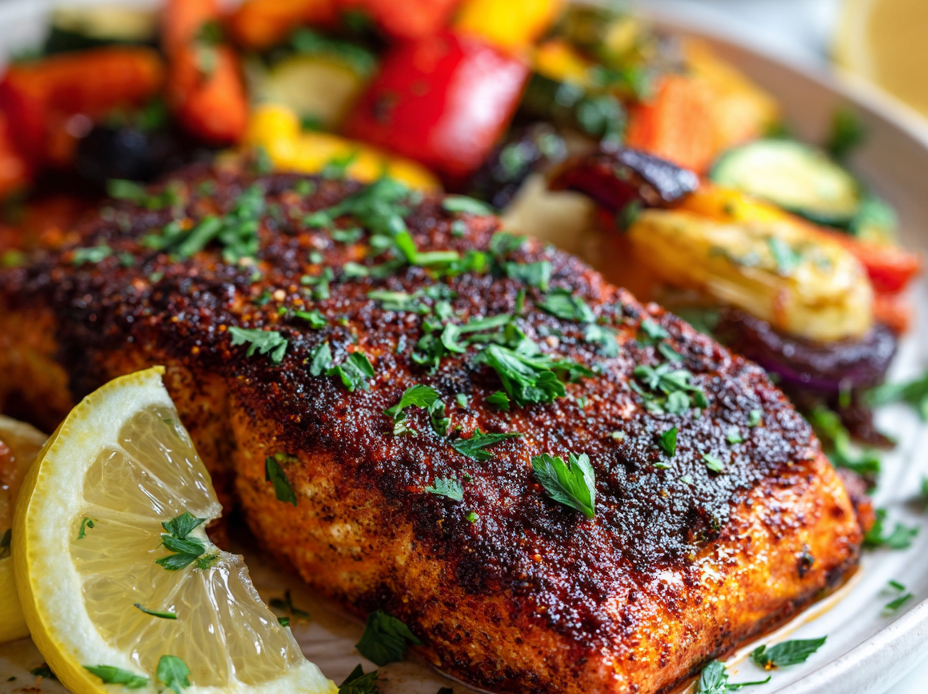
Blackened salmon is my go-to when I need a burst of smoky, spicy flavor without fuss. There’s something about that crust—rich, charred, with a hint of paprika—that makes every bite feel special, like a little seaside adventure in your own kitchen. It’s a dish I turn to on busy weeknights or lazy weekends, when I want bold without too much effort.
What I love most is how the spice mix transforms a simple fillet into something memorable. The sizzling sound as the seasoned salmon hits the hot pan, followed by that irresistible smoky aroma—it’s enough to make anyone stop and pay attention. Plus, it’s flexible; you can tweak the spice levels or add your favorite herbs, making it uniquely yours each time.
Focusing on the smoky, spice-crusted exterior that transforms simple salmon into a bold, flavor-packed dish, inspired by seaside grill nights and the thrill of creating restaurant-quality seafood at home.
The spice blend that sparks joy
- Blackened salmon reminds me of seaside grill nights, the air thick with smoky spice and salt, a reminder of summer vacations.
- I get a thrill from hearing that first sizzling crackle when the spice crust hits the hot pan, like a tiny fireworks show in my kitchen.
- There’s a nostalgic rush when I see that charred, paprika-streaked crust forming—it’s a reminder of simple pleasures and bold flavors.
- Sometimes, I toss in a pinch of cayenne just to kick the heat up a notch—makes every bite a little more rebellious.
- Cooking this dish feels like a mini celebration; the aroma alone can lift the gloomiest day.
The story behind this recipe
- This recipe came together on a night when I was craving something fiery and quick. I was experimenting with different spice blends, trying to capture that smoky, crusted exterior I love from seaside grills, but without firing up the actual grill. The moment I pressed that seasoned fillet into the hot cast iron and heard the initial crackle—boom—that was it. The aroma of paprika, cayenne, and garlic filling the kitchen felt like a little victory.
- Over the years, I’ve tweaked the spice mix, balancing heat and smokiness to suit my mood. I love how the crust develops that beautiful char, almost blackened but still tender inside. It’s a dish that’s simple, but with a bold punch—perfect for those nights when you want restaurant vibes without the fuss.
- heading: ‘The spark that ignited this dish’
History and fun facts
- Blackened seasoning originated in New Orleans, where Cajun and Creole flavors melded with fiery cooking techniques in the 1980s.
- Chef Paul Prudhomme popularized blackening, turning a rustic cooking method into a culinary signature that spread nationwide.
- The intense spice crust was originally a way to sear fish over open flames, creating a smoky, flavorful exterior while sealing in moisture.
- Despite its bold appearance, blackened salmon is surprisingly mild inside, with the spices mainly accentuating the natural richness of the fish.
- This technique has evolved from outdoor grills to stovetop cast iron pans, making it accessible for home cooks craving smoky, crusted seafood.
Key ingredients and tips
- Salmon fillets: I prefer skin-on for extra flavor and crispiness, but you can use skinless if you like a cleaner look. The flesh should be firm and bright pink, with a shiny, moist surface.
- Blackening spice mix: I love a blend of paprika, cayenne, garlic powder, onion powder, and thyme. Feel free to tweak the cayenne for heat—more for a fiery crust, less for milder spice. The aroma should be smoky, bold, with a hint of earthiness.
- Oil for searing: I usually go with vegetable or canola oil—something with a high smoke point. It should shimmer and crackle when it hits the hot pan, giving that perfect crust.
- Lemon juice: Brightens everything up. I squeeze fresh lemon over the fish after cooking for an extra zing—think zesty, fresh, and slightly tangy.
- Optional herbs: Chopped parsley or chives add a fresh contrast. I sprinkle them just before serving for a pop of color and freshness.
- Cooking pan: Heavy cast iron or stainless steel—something that retains heat well. It should be hot enough to sizzle when the fish hits, around 200°C / 400°F.
- Additional seasoning tweaks: Sometimes I add a pinch of smoked paprika or a dash of hot sauce to the spice mix. Adjust to your mood—smoky, spicy, or mild.
Spotlight on key ingredients
Salmon:
- Salmon fillets: I prefer skin-on for extra flavor and crispiness, but you can use skinless if you like a cleaner look. The flesh should be firm and bright pink, with a shiny, moist surface.
- Blackening spice mix: I love a blend of paprika, cayenne, garlic powder, onion powder, and thyme. Feel free to tweak the cayenne for heat—more for a fiery crust, less for milder spice. The aroma should be smoky, bold, with a hint of earthiness.
Cooking oil and lemon:
- Oil for searing: I usually go with vegetable or canola oil—something with a high smoke point. It should shimmer and crackle when it hits the hot pan, giving that perfect crust.
- Lemon juice: Brightens everything up. I squeeze fresh lemon over the fish after cooking for an extra zing—think zesty, fresh, and slightly tangy.
Notes for ingredient swaps
- Salt-Free Seasoning: Use a salt-free spice blend to control sodium. The flavor will still be smoky and bold, just less salty.
- Olive Oil: Swap with avocado or grapeseed oil for a milder, slightly nuttier flavor and similar high smoke point.
- Lemon Juice: Substitute with lime juice or a splash of white vinegar for a different citrus brightness or tangy kick.
- Fresh Herbs: Instead of parsley or chives, try cilantro or basil for a different aromatic note that pairs well with spicy crusts.
- Spice Mix: Omit cayenne for milder heat or replace with smoked paprika for extra smoky depth without added heat.
- Fish Choice: Use blackened seasoning on other firm fish like trout or swordfish—just adjust cooking times accordingly.
- Oil for Searing: If you prefer a non-stick approach, a well-seasoned cast iron or a bit of butter can work, but may alter the crust’s crispiness.
Equipment & Tools
- Cast iron skillet: Provides even heat and helps develop a good crust.
- Tongs: Turns the fish gently without breaking the fillet.
- Small bowl: Mixes and holds the spice blend.
- Spoon: Scoops and presses spices onto the fish.
Step-by-step guide to blackened salmon
- Gather your equipment: a heavy cast iron skillet, tongs, a small bowl, and a spoon. Preheat the skillet over medium-high heat until it shimmers, about 2-3 minutes (around 200°C / 400°F).
- Pat the salmon fillets dry with paper towels. Lightly brush both sides with oil—just enough to help the spices stick and prevent sticking.
- In a small bowl, mix your blackening spice blend: paprika, cayenne, garlic powder, onion powder, thyme, salt, and pepper. Adjust cayenne for heat preference.
- Sprinkle the spice mix evenly over both sides of the salmon, pressing gently to adhere. You want a generous coating—this is what creates that smoky crust.
- Carefully place the fillets skin-side down in the hot skillet. You should hear an immediate sizzle. Cook for 3-4 minutes until the spices turn dark and the fish releases easily from the pan.
- Flip the fillets gently with tongs. Cook for another 2-3 minutes, until the flesh is opaque and flakes easily. The crust should be dark but not burnt, with a slight smoky sheen.
- If the spice starts to burn or blacken too quickly, lower the heat slightly. If the fish isn’t cooking evenly, reduce heat or move to a cooler part of the pan.
- Remove the salmon from the skillet. Rest for 2 minutes on a warm plate to allow juices to redistribute. Squeeze fresh lemon over the top for brightness.
- Plate the fillets with your choice of sides. Garnish with chopped herbs like parsley or chives for color and freshness.
Let the salmon rest for 2 minutes to allow juices to settle. Squeeze fresh lemon over before serving to brighten the smoky flavors. Plate with your favorite sides and enjoy right away.
How to Know It’s Done
- Color: The crust should be dark, smoky, with a slight char, but not blackened or burnt.
- Texture: The inside should be tender, opaque, and flaky when gently pressed with a fork.
- Appearance: The fish should release easily from the pan without sticking, and the spice crust should be evenly browned.
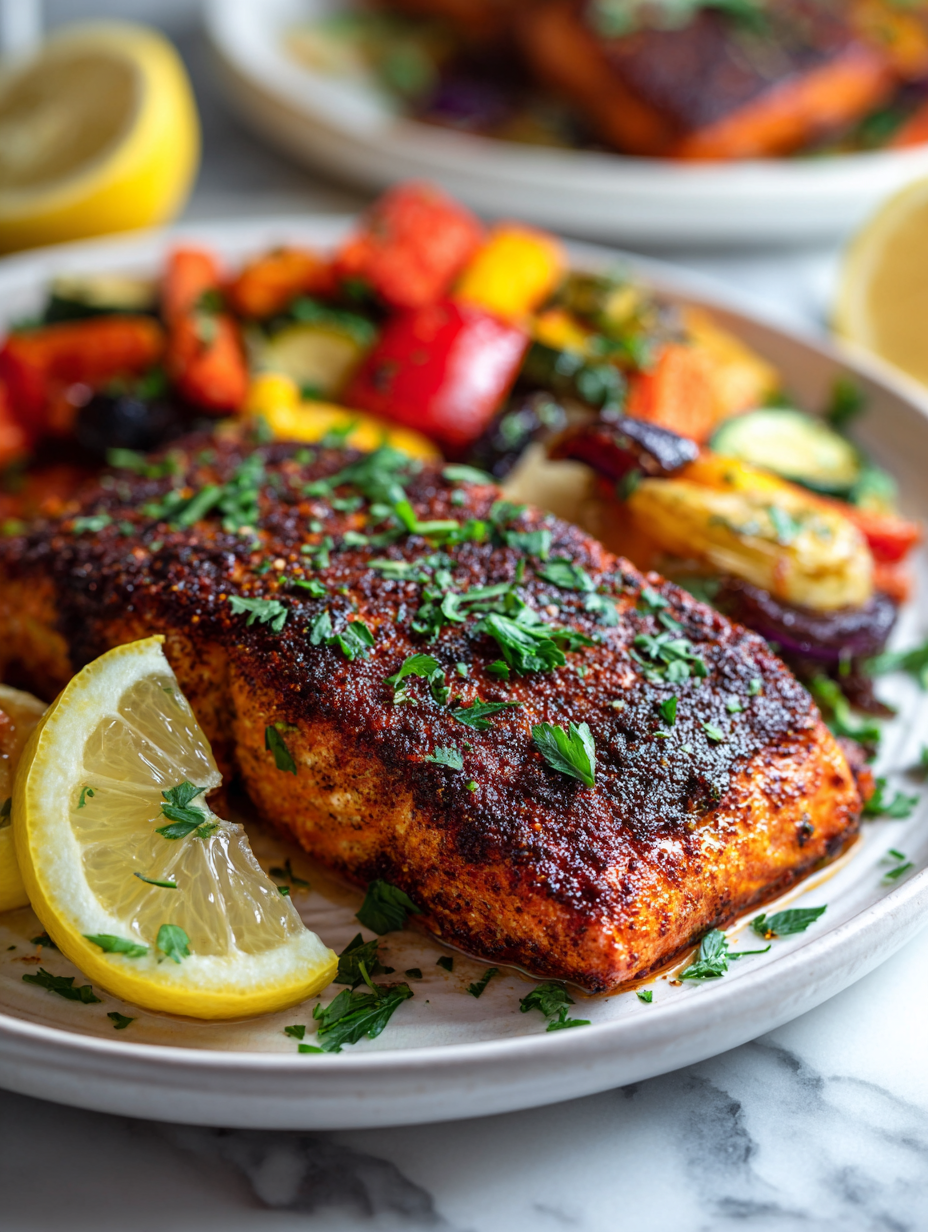
Blackened Salmon
Ingredients
Equipment
Method
- Preheat your cast iron skillet over medium-high heat until it shimmers and is hot to the touch, about 2-3 minutes.
- Pat the salmon fillets dry with paper towels to remove excess moisture, which helps achieve a better crust.
- Brush both sides of each fillet lightly with vegetable or canola oil to promote adherence of the spice mix and prevent sticking.
- In a small bowl, combine paprika, cayenne, garlic powder, onion powder, thyme, salt, and black pepper. Mix well to create your spice blend.
- Generously sprinkle and press the spice mixture onto both sides of the salmon fillets, ensuring an even coating that forms a crust.
- Carefully place the fillets skin-side down into the hot skillet using tongs. You should hear a sizzling sound immediately.
- Cook for 3-4 minutes until the spices darken and the fish releases easily from the pan without sticking.
- Gently flip the fillets with tongs and cook for another 2-3 minutes, until the flesh turns opaque and flakes easily with a fork.
- Remove the salmon from the skillet and rest for 2 minutes on a warm plate. Squeeze fresh lemon juice over the top for brightness.
- Garnish with chopped parsley or chives if desired, then serve immediately with your favorite sides.
Tips & Tricks for Perfect Blackened Salmon
- Bolded mini-head: Use a hot pan → Wait until it shimmers before adding the fish for that instant sear.
- Bolded mini-head: Don’t overcrowd the pan → Keep space between fillets to prevent steaming and ensure crisp crust.
- Bolded mini-head: Adjust spice quantity → More cayenne for fiery crust, less for subtle heat—trust your nose.
- Bolded mini-head: Press spices into fish → Gently pat the seasoning onto the surface for even coating and better crust formation.
- Bolded mini-head: Flip with confidence → Use tongs to turn the fillet gently, avoiding breakage and maintaining crust integrity.
- Bolded mini-head: Control heat during cooking → Lower slightly if spices blacken too fast, aiming for dark caramelization, not burnt.
- Bolded mini-head: Rest before serving → Let the fish rest 2 minutes off heat to keep it juicy and prevent flaking.
Common mistakes and how to fix them
- FORGOT to preheat the pan → Always heat your skillet until shimmering before adding fish.
- DUMPED too much oil → Use just enough to coat the pan lightly, avoid splatters and soggy crust.
- OVER-TORCHED the spice crust → Reduce heat if spices blacken too quickly, aim for dark, not burnt.
- MISSED resting time → Let the fish rest 2 minutes after cooking to retain juices and improve texture.
Quick Fixes and Pantry Swaps
- If the spice crust burns quickly, splash a little water to cool the pan and lower heat.
- When fish sticks, dump excess oil and increase heat slightly for better sear.
- Splash lemon juice when the fish releases easily to brighten smoky flavors.
- Patch a sticky pan with a paper towel and a dash of oil, then heat again for instant rescue.
- Shield from pantry: swap smoked paprika with regular paprika for a milder, less smoky crust.
Prep, store, and reheat tips
- Pre-mix the spice blend and store in an airtight container; it keeps well for a month, and the smoky aroma makes prep faster.
- Pat the salmon dry and season it a few hours before cooking; keep covered in the fridge to allow flavors to meld while maintaining freshness.
- Cooked salmon can be stored in an airtight container in the fridge for up to 2 days. The smoky crust may soften slightly but still retains flavor.
- Reheat gently in a hot skillet over medium heat, about 2 minutes per side, until warmed through and the crust regains some crispness. Add a squeeze of lemon after to brighten the flavor.
Top questions about blackened salmon
1. Can I use frozen salmon?
Use fresh, firm salmon with bright pink flesh and shiny skin. It cooks evenly and flakes nicely.
2. Can I cook blackened salmon in the oven?
Yes, but thaw completely and pat dry before seasoning to avoid excess moisture and steaming.
3. How do I get a good crust without a stovetop?
Yes, bake at 200°C (400°F) for about 12-15 minutes, or until flaky and cooked through.
4. How hot should the pan be?
Ensure the pan is very hot before adding the fish. The crust forms quickly, so don’t rush it.
5. How do I know when the salmon is cooked?
The fish is done when it flakes easily with a fork and reaches 63°C (145°F) internally.
6. Can I make this less spicy?
Adjust the cayenne and paprika in the spice mix based on your heat preference. Less cayenne for milder, more smoky flavor.
7. What oil works best for searing?
Use a high smoke point oil like canola or vegetable oil to prevent burning and ensure a crisp crust.
8. Can I use other fish instead of salmon?
Yes, you can substitute with trout or swordfish, but adjust the cooking time for thickness.
9. How long does cooked salmon last?
Yes, refrigerate leftovers in an airtight container for up to 2 days. Reheat gently to avoid overcooking.
10. Should I add lemon before or after cooking?
Use a splash of lemon or lime juice after cooking for added brightness and flavor contrast.
This blackened salmon recipe isn’t just about bold flavors; it’s about that satisfying moment when the smoky crust gives way to tender, flaky fish inside. It’s a dish that’s quick enough for weeknights but bold enough to feel special. Honestly, once you get that crust right, it’s hard to go back to plain salmon.
In these times, there’s comfort in making something that feels both lively and straightforward. The aroma alone—smoky, spicy, slightly charred—can lift your spirits. And really, it’s about the little wins in the kitchen—perfectly seared fish, a squeeze of lemon, and a moment of pride in a job well done.

Hi, I’m Madison Greene, the creator behind Texture Obsessed. If you have ever fallen in love with the crunch of a perfectly toasted crust, the silkiness of a smooth custard, or the contrast between crispy and creamy in a single bite, then you already understand what inspires me.