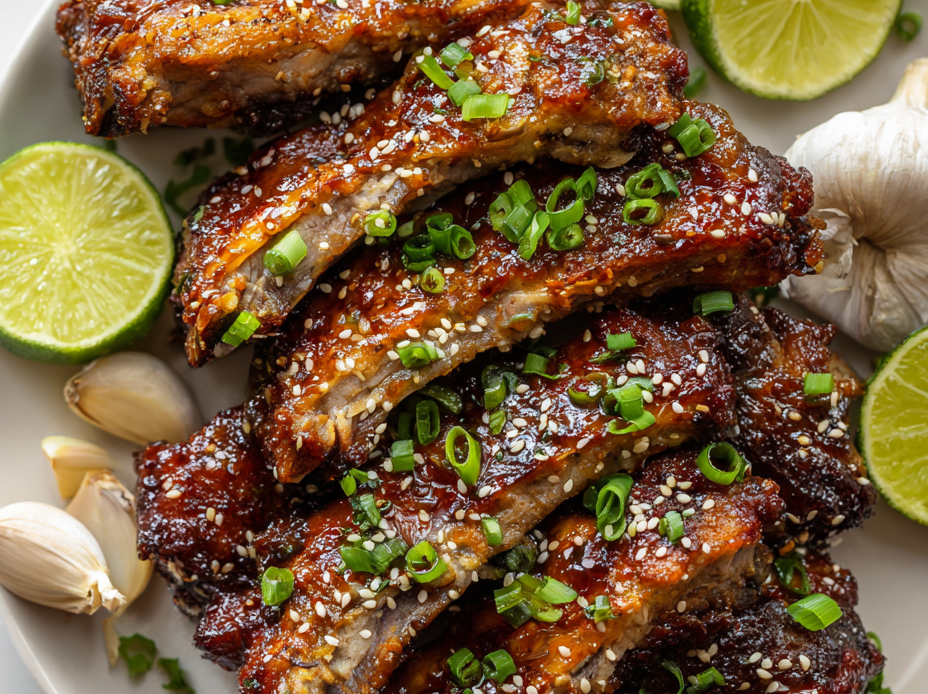
When I first started making sticky pork ribs, it was all about that glossy, caramelized crust that forms during the slow simmer and glaze. There’s something almost hypnotic about watching the sugar and soy turn sticky and crackly, filling the kitchen with a smoky-sweet aroma that makes everyone gather around. It’s a messy process, but the payoff—those tender, fall-off-the-bone bites—makes all the patience worth it.
This dish reminds me of summer cookouts and lazy weekends, where the air is thick with the smell of roasted meat and tangy sauces. I love how each layer of glaze develops deep flavor—sweet, salty, smoky—building a complex crust that’s both sticky and crisp. It’s honest cooking, where the focus is on slow transformation and the joy of a dish that’s rich, glossy, and utterly satisfying.
Focusing on the caramelization process, I want to share how building layers of flavor through a slow, sticky glaze turns simple pork ribs into a rich, glossy masterpiece. It’s about patience, watching that glaze turn from syrupy to crackly, and how the smell of caramelized sugars and smoky pork fills the kitchen, creating a cozy, almost nostalgic atmosphere.
Caramelized Layers of Joy
- Cooking these ribs always takes me back to summer family barbecues, where the air is thick with smoky sweetness.
- There’s a strange pride I feel when I see that thick glaze crackle and form a glossy, sticky crust—like a little edible trophy.
- Sometimes I get frustrated trying to perfect the balance of sweetness and savoriness, but that first bite makes it all worthwhile.
- This dish has become my go-to when I want to impress friends—nothing beats the look on their faces when they see that sticky sheen.
- I love how the kitchen smells when those sugars caramelize—rich, smoky, almost addictive—especially on chilly evenings.
Caramelized Layers of Joy
Making these sticky pork ribs started as an attempt to replicate the ribs I enjoyed at a tiny, tucked-away barbecue joint. I was obsessed with that perfect balance of sticky, sweet glaze and smoky meat—something that took patience to get just right. Over time, I realized it was more about layering flavors slowly, letting the sugars develop that irresistible crackly crust, then finishing with a quick broil to lock it all in. Now, it’s become my go-to for weekends when I want something rich, messy, and deeply satisfying.
Sticky Ribs’ Cultural Roots
- Sticky pork ribs have roots in Asian barbecue traditions, especially Chinese char siu, where a sweet, sticky glaze is essential.
- The technique of caramelizing sugar on ribs dates back centuries, turning simple meat into a glossy, flavorful masterpiece.
- In many cultures, ribs with a sticky glaze symbolize community and celebration, often served at festivals and family gatherings.
Ingredient breakdown: key components
- Pork ribs: I look for ribs with good marbling—fat adds flavor and keeps them juicy. Swap with chicken thighs if you want a leaner option, but expect less richness.
- Soy sauce: It’s my go-to for that salty, umami punch. Tamari works as a gluten-free swap, though it’s a bit earthier.
- Brown sugar: I love how it gives that deep caramel flavor and sticky texture. Maple syrup can be a sweet alternative, but it’s lighter and more floral.
- Honey: Adds a floral sweetness and helps with glossiness. Agave nectar can be used instead, though it’s slightly thinner and less aromatic.
- Garlic: I crush fresh garlic for punch and depth. Garlic powder works in a pinch, but it won’t give that punchy aroma during caramelization.
- Ginger: I use fresh grated ginger for a bright, spicy kick. Ground ginger is okay, but it’s less vibrant and more muted.
- Sesame oil: A small splash adds a nutty, smoky note. Skip or reduce if you prefer a lighter glaze, but it really enhances depth and aroma.
Spotlight on key ingredients
Pork Ribs:
- I look for ribs with good marbling—fat adds flavor and keeps them juicy. Swap with chicken thighs if you want a leaner option, but expect less richness.
- Soy sauce: It’s my go-to for that salty, umami punch. Tamari works as a gluten-free swap, though it’s a bit earthier.
- Brown sugar: I love how it gives that deep caramel flavor and sticky texture. Maple syrup can be a sweet alternative, but it’s lighter and more floral.
Key Flavored Liquids & Aromatics:
- Honey: Adds a floral sweetness and helps with glossiness. Agave nectar can be used instead, though it’s slightly thinner and less aromatic.
- Garlic: I crush fresh garlic for punch and depth. Garlic powder works in a pinch, but it won’t give that punchy aroma during caramelization.
- Sesame oil: A small splash adds a nutty, smoky note. Skip or reduce if you prefer a lighter glaze, but it really enhances depth and aroma.
Notes for ingredient swaps
- Pork Ribs: I prefer baby back ribs for tenderness. Spare ribs work too, just expect a meatier, fattier bite.
- Soy Sauce: Tamari is a good gluten-free alternative, though it’s a bit richer and less salty.
- Brown Sugar: Coconut sugar gives a similar caramel depth with a slightly nuttier flavor, but less sweetness.
- Honey: Maple syrup adds a different floral note, and is slightly thinner—adjust glaze thickness accordingly.
- Garlic: Fresh garlic is better for punch and aroma. Garlic powder is a quick fix but less vibrant.
- Ginger: Fresh grated ginger brings brightness; ground ginger can be used but lacks the zing.
- Sesame Oil: Toasted sesame oil adds smoky richness; skip if you want a lighter flavor, but it’s worth the aroma.
Equipment & Tools
- Oven: To cook the ribs slowly and evenly.
- Baking sheet with foil: To contain drips and facilitate easy cleanup.
- Basting brush: To apply the glaze smoothly and evenly.
- Sharp knife: To slice between the bones after resting.
- Tongs: To handle hot ribs safely.
Step-by-step guide to sticky ribs
- Preheat your oven to 150°C (300°F). Gather a baking sheet, foil, and a basting brush. This low and slow start is key for tender ribs.
- Remove the thin membrane from the back of the ribs with a paper towel grip. This helps the glaze penetrate and keeps them from being chewy.
- Rub the ribs generously with salt, pepper, and a pinch of smoked paprika. Let sit for 15 minutes while you prepare the glaze.
- Mix soy sauce, brown sugar, honey, minced garlic, grated ginger, and a splash of sesame oil in a bowl. This will be your sticky glaze.
- Place ribs on the baking sheet lined with foil. Cover tightly with foil to trap moisture. Bake in the oven for 2.5 hours, until the meat is tender and pulls away from the bone.
- Carefully remove from oven, uncover, and brush with the glaze. Increase oven temperature to 220°C (430°F).
- Return ribs to oven, uncovered, for 15-20 minutes. Baste every 5 minutes. Watch for the glaze to turn dark and crackly—this is your sign.
- For extra caramelization, broil for 2-3 minutes, keeping a close eye to avoid burning. The crust should be glossy, sticky, and slightly crispy.
- Rest the ribs for 5 minutes on a cutting board. Letting them rest helps retain juices and finishes the caramelization.
- Slice between the bones, serve with extra glaze on the side. The meat should be tender, sticky, and richly fragrant.
Let the ribs rest covered loosely with foil for 5 minutes. Slice between bones and serve immediately with extra glaze if desired.
How to Know It’s Done
- Color: Glaze is dark, crackly, and glossy after broiling.
- Texture: Meat is tender, pulls easily from the bone, with a sticky crust.
- Appearance: Ribs are evenly glazed with no raw meat showing.
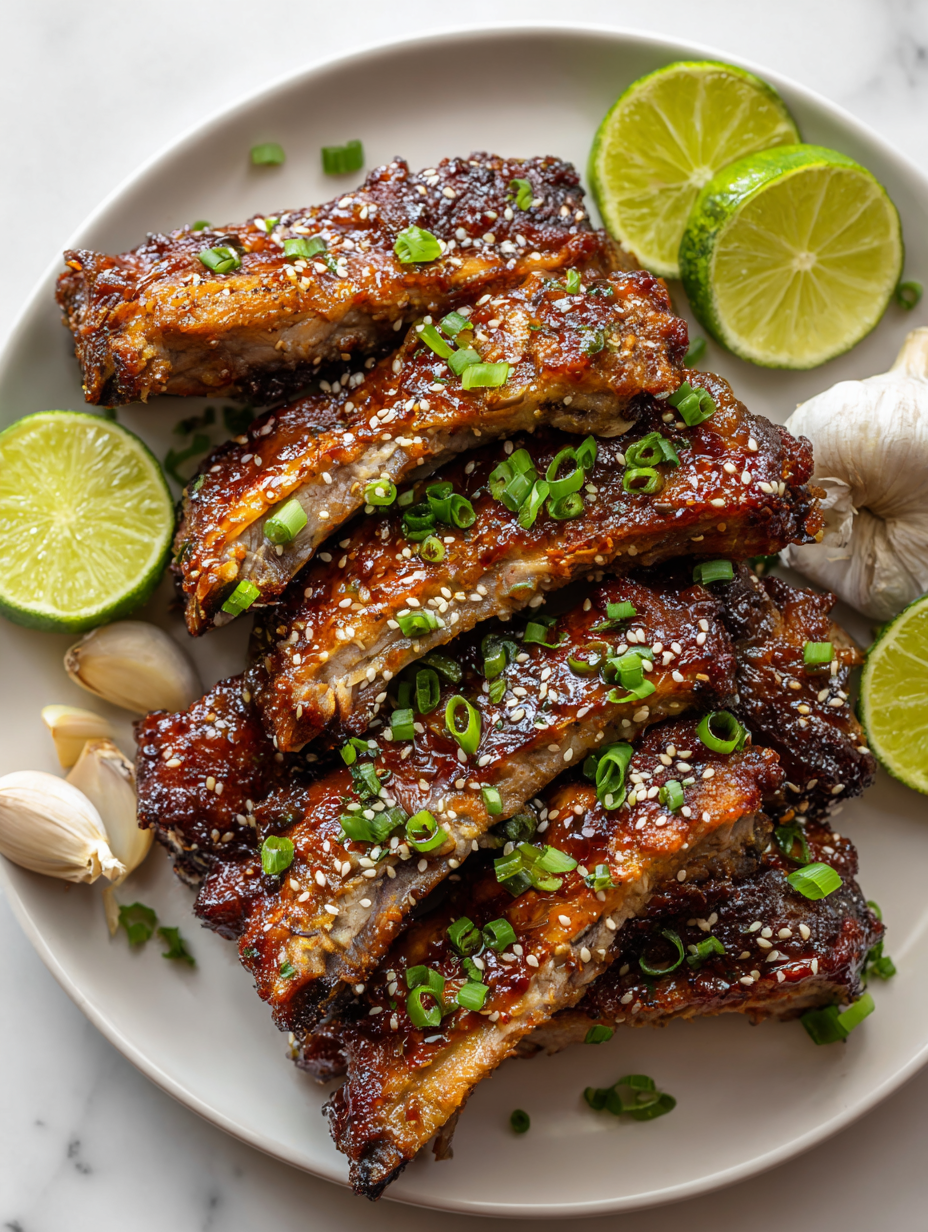
Sticky Caramelized Pork Ribs
Ingredients
Equipment
Method
- Preheat your oven to 150°C (300°F). Line a baking sheet with foil and set aside.
- Remove the thin membrane from the back of the ribs using a paper towel grip to help it peel away easily. This step ensures the glaze penetrates better and the ribs become tender.
- Rub the ribs generously with salt, pepper, and smoked paprika. Let them sit at room temperature for about 15 minutes while you prepare the glaze.
- In a bowl, whisk together soy sauce, brown sugar, honey, minced garlic, grated ginger, and sesame oil to create your sticky glaze. It should smell fragrant and look slightly thick and syrupy.
- Place the ribs on the prepared baking sheet, then cover tightly with foil to trap moisture. Bake in the oven for about 2.5 hours, until the meat is tender and begins to pull away from the bones.
- Carefully remove the ribs from the oven, uncover, and brush generously with the prepared glaze, ensuring an even coating. Increase the oven temperature to 220°C (430°F).
- Return the ribs to the oven, uncovered, and bake for an additional 15-20 minutes. Baste with the glaze every 5 minutes, watching for it to turn dark, crackly, and glossy—as this indicates caramelization.
- For extra crispiness, broil the ribs for 2-3 minutes, keeping a close eye so they don’t burn. The glaze should shimmer and crackle, forming a beautiful crust.
- Remove the ribs from the oven and let them rest loosely covered with foil for about 5 minutes. This helps juices redistribute and the glaze to set beautifully.
- Slice the ribs between the bones using a sharp knife. Serve immediately, with the glossy, crackly crust facing up and extra glaze on the side if desired.
Notes
Pro tips for sticky ribs
- Bolded: Use a clean brush to apply glaze evenly—avoid pooling for a glossy finish.
- Bolded: Keep the oven door slightly ajar during broil—helps prevent burning and promotes even caramelization.
- Bolded: Watch the color closely—aim for a deep amber before crackling, not blackened.
- Bolded: Rest the ribs loosely covered with foil—this lets the juices redistribute and the glaze set.
- Bolded: For extra crackle, increase broil heat gradually—don’t rush that crispy, sticky crust.
- Bolded: Add a splash of water or vinegar to the glaze if it starts to burn—keeps it smooth and prevents bitterness.
Common mistakes and how to fix them
- FORGOT to monitor glaze color → Keep a close eye for dark, crackly crust.
- DUMPED sauce too early → Wait until glaze is glossy and crackling before broiling.
- OVER-TORCHED ribs → Reduce broil time and watch for smoky smell and crackle.
- MISSED resting step → Rest for 5 minutes to let juices settle and glaze set properly.
Fast fixes for perfect sticky ribs
- When glaze shimmers and crackles, splash with a tiny bit of water to stop burning.
- If sauce is too thick, stir in a splash of hot water or vinegar for shine and looseness.
- Patch cracks in glaze with a quick brush of extra sauce before broiling for uniform gloss.
- DUMPED ribs in oven too early? Rest on a warm plate for 5 minutes to keep juices locked in.
- When ribs aren’t sticky enough, open the broiler and shimmer with a quick brush of honey or soy glaze.
Prep, store, and reheat tips
- You can prepare the glaze a day in advance; keep it in an airtight jar in the fridge. The flavors meld and intensify overnight.
- Assemble the ribs and rub with salt and spices up to 4 hours ahead. Wrap tightly and refrigerate to let the salt work its way in.
- Cook the ribs in the oven up to 2 days ahead. Once cooled, store covered in the fridge for up to 3 days. Reheat gently to preserve tenderness and glaze integrity.
- Reheating: Warm ribs in a covered foil tent at 150°C (300°F) until heated through, about 20-25 minutes. Brush with fresh glaze and broil briefly for crispness. Expect a sticky, fragrant aroma and tender meat.
Top questions about sticky pork ribs
1. What type of ribs should I choose?
Look for ribs with a good layer of fat and marbling for flavor and juiciness. You can also use chicken thighs if you prefer leaner meat, but they won’t be as rich.
2. Can I substitute soy sauce?
Soy sauce adds depth and saltiness, while tamari is a gluten-free alternative. Both will give that umami punch, but tamari has a richer, earthier flavor.
3. What sugar should I use?
Brown sugar creates a deep caramel flavor and sticky glaze. Maple syrup can work as a lighter, floral-sweet alternative, but expect a slightly different flavor and texture.
4. Can I replace honey?
Honey gives a floral sweetness and helps create that shiny, crackly crust. Agave nectar is a good swap, but it’s a bit thinner and less aromatic.
5. Is garlic powder okay?
Fresh garlic provides punch and aroma, especially during caramelization. Garlic powder is quicker but won’t deliver the same vibrant aroma and depth.
6. Can I use ground ginger?
Fresh grated ginger offers brightness and spice. Ground ginger is acceptable but less lively and more muted in flavor.
7. What if I don’t have sesame oil?
Toasted sesame oil adds a nutty, smoky aroma. You can omit it for a lighter flavor, but it really enhances the overall depth and fragrance.
8. How do I know when the glaze is done?
Watch the glaze closely during broiling—when it turns dark, crackly, and glossy, it’s ready. Ribs should be tender and pulling from the bone.
9. Should I rest the ribs?
Let the ribs rest loosely covered with foil for about 5 minutes after cooking. This helps juices redistribute and the glaze set properly.
10. What if the glaze isn’t sticky enough?
If the glaze is too thick or sticky, stir in a splash of hot water or vinegar to loosen it up. For a quick fix, brushing on more glaze helps build that shiny crust.
These sticky pork ribs aren’t just about the flavor—they’re about the process, the patience, and that moment when the glaze crackles and shines. It’s a messy, fragrant dance that ends with a forkful of tender, caramelized meat, each bite rich with smoky-sweet depth.
In a world rushing toward instant everything, this dish reminds me that good things take time—slow caramelization, careful broiling, and a little bit of mess. It’s the kind of meal that sticks with you long after the last bite, filling the kitchen with warmth and the promise of something truly satisfying.

Hi, I’m Madison Greene, the creator behind Texture Obsessed. If you have ever fallen in love with the crunch of a perfectly toasted crust, the silkiness of a smooth custard, or the contrast between crispy and creamy in a single bite, then you already understand what inspires me.