
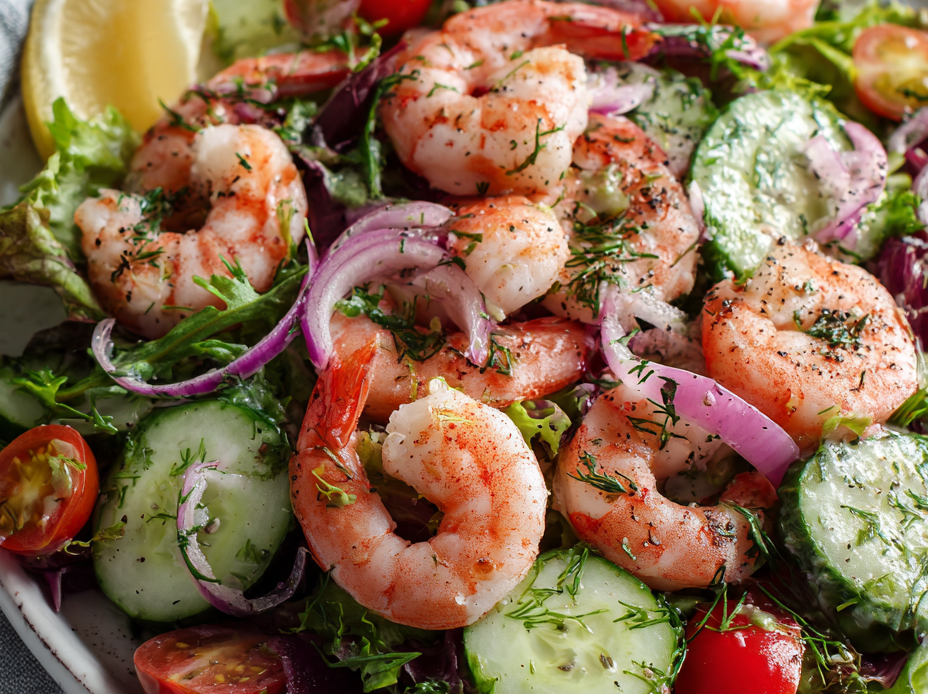
Shrimp often get overlooked as just a quick protein add-on, but their texture can truly shine in a salad. I love how their firm bite and juicy burst make every bite a little more interesting, almost like a snack within a meal. It’s simple, but paying attention to that texture transforms the whole dish.
This recipe is about highlighting those underappreciated shrimp qualities. No fancy ingredients needed—just fresh shrimp, crisp veggies, and a tangy dressing. It’s perfect for when you want something light, quick, and satisfying, especially on those warm evenings when you crave something refreshing but with a bit of bite.
Focusing on the underappreciated textures of shrimp—how their firm bite and juicy snap can elevate a simple salad into a satisfying snack or light meal.
The story behind this recipe
- I first made this shrimp salad on a humid summer evening, just after a trip to the market where I scored some plump, fresh shrimp. The way the shrimp’s juicy snap paired with the crisp vegetables and zingy dressing brought back memories of seaside picnics, simple and honest. It’s a dish that reminds me how satisfying small bites can be, especially when the ingredients are truly fresh.
- This recipe came together out of a need for something quick but full of flavor—no fuss, no fancy tricks, just honest ingredients. I love how the firm bite of the shrimp contrasts with the crunch of the veggies and the tang of the dressing. It’s a reminder that sometimes, simplicity is the best way to really enjoy seafood—no heavy sauces, just pure, bright flavors.
- heading: ‘The story behind this recipe’
Key ingredients and tips
- Shrimp: I love using large, fresh shrimp with a firm bite and sweet, briny flavor—look for ones with a slight sheen and no fishy smell. Swap for cooked lobster or scallops if you want a different seafood twist.
- Lemon juice: Brightens everything with a zingy, citrusy punch. If you’re out, a splash of lime or vinegar can lift the salad just as well—just adjust the acidity to taste.
- Olive oil: Adds richness and a smooth mouthfeel. Use good-quality, fruity extra virgin for depth, or swap for avocado oil for a milder, buttery note.
- Veggies (cucumber, radish): I prefer crisp, fresh cucumbers and peppery radishes—think crunch and freshness. You can substitute with bell peppers or celery for a different texture and flavor profile.
- Herbs (cilantro, parsley): I love the bright, herbal pop they add. If you’re not a fan, basil or dill work beautifully too, bringing their own fresh aroma and flavor.
- Dressing ingredients (mustard, honey): I keep it simple with a touch of Dijon and honey for balance—sweet, tangy, with a hint of spice. If you’re out, a splash of vinegar or a dash of hot sauce can add a surprising kick.
- Salt & pepper: Essential for bringing it all together. I prefer flaky sea salt for texture, but kosher salt works just as well—adjust to taste for seasoning balance.
Spotlight on key ingredients
Shrimp:
- I prefer large, fresh shrimp with a firm bite and sweet, briny flavor—look for ones with a slight sheen and no fishy smell. Swap for cooked lobster or scallops if you want a different seafood twist.
- Lemon juice: Brightens everything with a zingy, citrusy punch. If you’re out, a splash of lime or vinegar can lift the salad just as well—just adjust the acidity to taste.
Herbs and dressing:
- Herbs (cilantro, parsley): I love the bright, herbal pop they add. If you’re not a fan, basil or dill work beautifully too, bringing their own fresh aroma and flavor.
- Dressing ingredients (mustard, honey): I keep it simple with a touch of Dijon and honey for balance—sweet, tangy, with a hint of spice. If you’re out, a splash of vinegar or a dash of hot sauce can add a surprising kick.
Notes for ingredient swaps
- Seafood: Fresh shrimp are ideal for firm texture and sweet brine. Swap with cooked lobster or scallops for a different seafood experience—just adjust cooking times accordingly.
- Citrus: Lemon juice adds brightness and tang. Lime or vinegar can replace it—just taste and tweak acidity to keep the salad lively.
- Oil: Extra virgin olive oil gives a fruity richness. Avocado oil works well for a milder, buttery note, especially if you prefer a subtler flavor.
- Veggies: Cucumber and radish provide crunch and freshness. Bell peppers or celery are good substitutes, offering different textures and flavor sparks.
- Herbs: Cilantro and parsley bring herbal brightness. Basil or dill are nice alternatives, adding their own fresh aroma and personality.
- Sweetener & Mustard: Honey and Dijon balance the dressing with sweetness and spice. If you’re out, a splash of balsamic or hot sauce can add a new layer of flavor.
- Salt & Pepper: Essential for seasoning. Flaky sea salt offers texture, but kosher salt works too—just season to taste and avoid over-salting.
Equipment & Tools
- Medium-sized mixing bowl: Combine and toss ingredients.
- Sharp paring knife: Slice vegetables and herbs.
- Cutting board: Provide a stable surface for prep.
- Skillet or grill pan: Cook shrimp if raw.
- Small pot: Boil shrimp from raw.
Step-by-step guide to shrimp salad
- Equipment setup: Use a medium-sized mixing bowl, a sharp paring knife, a cutting board, and a grill pan or skillet. Have a small pot ready for boiling water if cooking shrimp from raw.
- Prepare the shrimp: If raw, bring water with a pinch of salt to a gentle boil (about 100°C / 212°F). Drop in shrimp, cook until they turn opaque and pink, about 2-3 minutes. Drain and set aside to cool slightly. If using pre-cooked shrimp, just rinse and pat dry.
- Make the dressing: In a small bowl, whisk together 2 tablespoons lemon juice, 1 teaspoon Dijon mustard, 1 teaspoon honey, 3 tablespoons olive oil, salt, and pepper. Adjust seasoning to taste. The dressing should be bright and slightly tangy.
- Prep the veggies: Thinly slice ½ cucumber and 2 radishes. Chop a handful of fresh herbs (cilantro and parsley). Place in the large mixing bowl.
- Assemble the salad: Add the cooled shrimp to the bowl. Pour the dressing over everything. Gently toss to coat evenly, breaking up the shrimp slightly to distribute flavor. Watch for a glistening, vibrant mixture with visible herbs and crisp vegetables.
- Final check: The shrimp should be firm and shiny, veggies crisp and colorful, and the dressing well incorporated. If you see excess liquid, drain briefly, then toss again. If necessary, adjust seasoning with more salt or lemon juice.
- Rest briefly: Let the salad sit for 5 minutes to meld flavors and allow the dressing to soak in. Serve immediately or chill for up to 30 minutes for extra refreshment.
Serve immediately in chilled bowls, garnished with extra herbs if desired. For best flavor, let sit 5 minutes before serving to allow the dressing to meld with the ingredients.
How to Know It’s Done
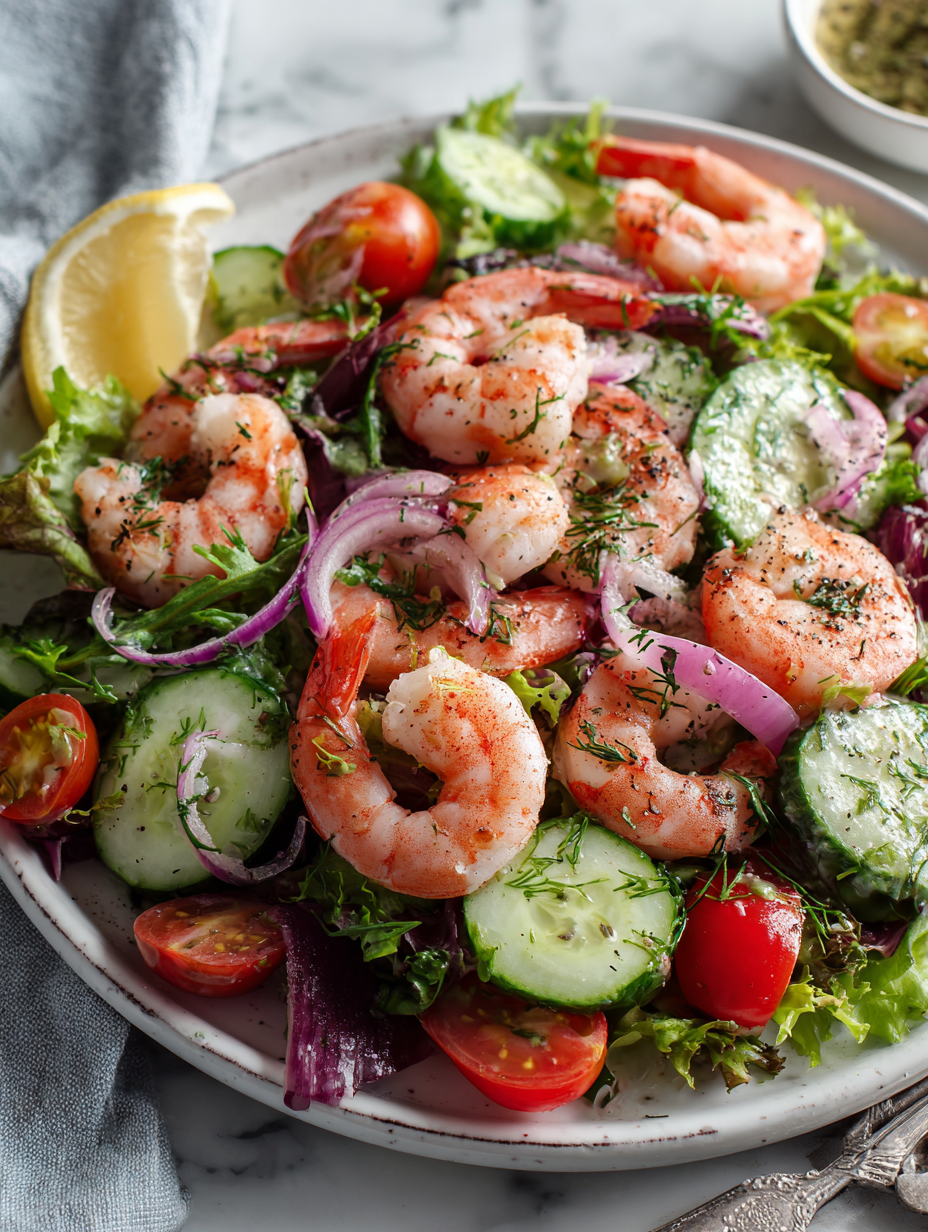
- Shrimp: opaque, firm, with a juicy snap when pressed.
- Vegetables: crisp, vibrant, with a fresh aroma.
- Dressing: bright, tangy, coats evenly without pooling.
Fresh Shrimp Salad
Ingredients
Equipment
Method
- Bring a small pot of water to a gentle boil, then add the shrimp and cook until they turn pink and opaque, about 2-3 minutes. Drain and set aside to cool slightly.
- In a small bowl, whisk together lemon juice, Dijon mustard, honey, salt, and pepper. Slowly drizzle in olive oil while whisking to create a bright, emulsified dressing.
- Slice the cucumber and radishes into thin rounds, then chop the cilantro and parsley. Place all the chopped vegetables and herbs into a large mixing bowl.
- Add the cooled shrimp to the bowl with vegetables and herbs, then pour the dressing over the top.
- Gently toss everything together using a spoon or spatula, ensuring the shrimp and vegetables are evenly coated with the dressing. The shrimp should stay firm and juicy, and the vegetables crisp and colorful.
- Let the salad sit for about 5 minutes to allow the flavors to meld. Taste and adjust seasoning with more salt or lemon juice if needed.
- Serve the shrimp salad chilled or at room temperature, garnished with extra herbs if desired. Enjoy the fresh, vibrant textures in every bite.
Pro tips for perfect shrimp salad
- Use fresh, firm shrimp with a slight sheen for optimal texture and flavor.
- When cooking shrimp, watch for a color change to pink and opaque—about 2-3 minutes, no more.
- For dressing, emulsify lemon juice, mustard, and honey first—this creates a smooth, cohesive sauce.
- Toss the salad gently to avoid breaking the shrimp and to evenly distribute the dressing.
- Chill the assembled salad for at least 5 minutes—this helps the flavors meld and enhances freshness.
- If shrimp become overcooked, quickly rinse in ice water to halt cooking and retain juiciness.
- Use a wide, shallow bowl for tossing—this prevents ingredients from spilling and ensures even coating.
Common mistakes and how to fix them
- FORGOT to specify shrimp size → Use large, fresh, firm shrimp for best texture.
- DUMPED the dressing on all at once → Toss gradually to coat evenly and avoid sogginess.
- OVER-TORCHED the shrimp → Cook just until opaque and pink, about 2-3 minutes, to keep juiciness.
- MISSED resting time → Let salad sit 5 minutes before serving to meld flavors and improve texture.
Quick fixes and pantry swaps
- When shrimp smell ammonia, splash with lemon juice to neutralize odors.
- If dressing separates, whisk in a teaspoon of warm water to re-emulsify.
- Splash a little vinegar if salad feels too bland or dull—brightens flavors instantly.
- Patch overcooked shrimp with a squeeze of fresh lemon to add brightness and moisture.
- Shield delicate greens by tossing with dressing just before serving to prevent wilting.
Prep, store, and reheat tips
- Prep the shrimp: Cook, peel, and chill up to 1 day ahead for maximum freshness and firm texture.
- Chop vegetables and herbs: Store in an airtight container for up to 2 days, keeping crunch and color vibrant.
- Make the dressing: Whisk and refrigerate in a sealed jar for up to 3 days; give it a quick shake before using.
- Assembly: Combine shrimp, veggies, and dressing just before serving to maintain crispness and bright flavors.
- Shelf life: Best enjoyed within 24 hours of assembly; flavors diminish and vegetables soften after that.
- Reheating: Not recommended—serve cold or at room temperature to preserve texture and freshness.
Top questions about shrimp salad
1. How do I choose the best shrimp?
Use large, fresh, firm shrimp with a slight sheen and no fishy smell. Swap with cooked lobster or scallops for variety.
2. Can I substitute the lemon juice?
Lemon juice adds a bright, tangy flavor. Lime or vinegar can replace it, just taste and adjust acidity.
3. What oil should I use?
Use good-quality olive oil for richness. Avocado oil is a milder alternative with a buttery note.
4. Can I use other vegetables?
Crisp cucumber and radish give crunch and freshness. Bell peppers or celery also work for different textures.
5. What herbs are best for this salad?
Fresh herbs like cilantro and parsley add herbal brightness. Basil or dill are nice alternatives for different aromas.
6. Can I change the dressing ingredients?
Dijon and honey balance the dressing with a sweet-tangy kick. Balsamic or hot sauce can be fun swaps.
7. How much salt is enough?
Season with flaky sea salt or kosher salt to enhance flavors. Adjust to taste for proper seasoning.
8. How do I cook shrimp properly?
Cook raw shrimp in boiling water with a pinch of salt until pink and opaque, about 2-3 minutes. Chill before mixing.
9. How do I toss the salad without breaking the shrimp?
Gently toss ingredients to prevent breaking the shrimp and to ensure even coating with dressing.
10. Should I chill the salad before serving?
Chill the assembled salad for at least 5 minutes to let flavors meld. Best served cold or at room temperature.
This shrimp salad is a reminder that simple, honest ingredients can really shine when treated well. Its firm, juicy bite and the zing of citrus make it perfect for warm days or casual gatherings. Sometimes, it’s the straightforward dishes that stick with us the longest.
No matter how often I make it, I’m impressed by how easily it comes together and how fresh it tastes. It’s a dish that doesn’t overthink, just honest, good flavors in every bite—nothing fancy, just real food.

Hi, I’m Madison Greene, the creator behind Texture Obsessed. If you have ever fallen in love with the crunch of a perfectly toasted crust, the silkiness of a smooth custard, or the contrast between crispy and creamy in a single bite, then you already understand what inspires me.