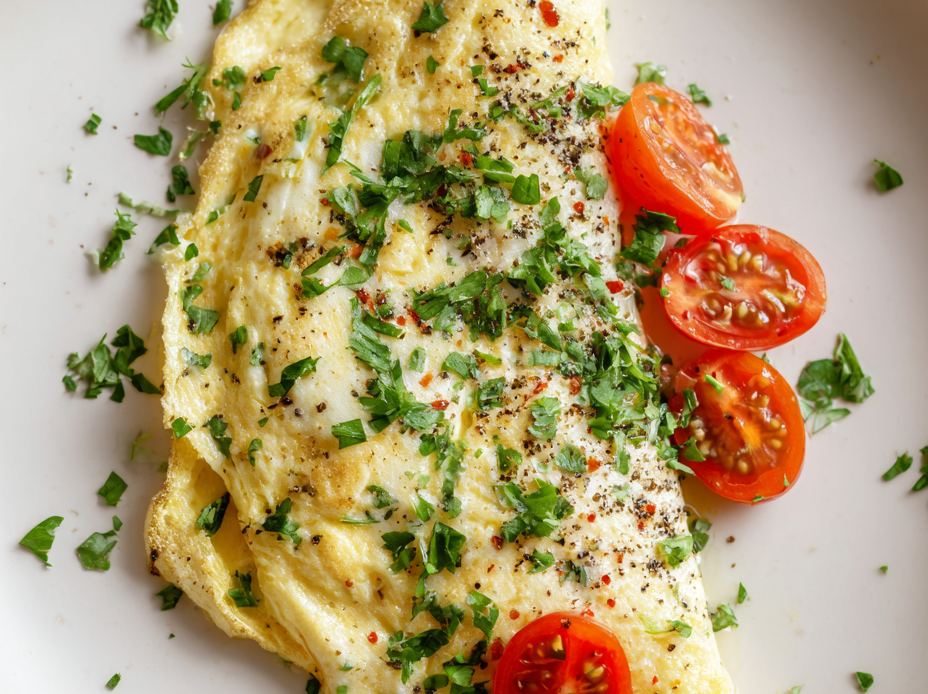
Focusing on the underrated art of making a fluffy, perfectly cooked egg white omelette reveals that technique matters more than you might think. It’s about controlling heat, patience, and a gentle touch—almost meditative in its simplicity. I’ve found that once you nail the basics, it becomes a quiet moment of mastery in a busy morning.
This recipe isn’t just about protein boost or quick prep; it’s about embracing the subtlety of egg whites, the delicate dance between heat and patience. It’s surprisingly forgiving, yet demands respect for its fragility. When done right, it’s a light, airy bite that feels like a small victory, especially when paired with fresh herbs or a dash of hot sauce.
Focusing on the underrated art of making a fluffy, perfectly cooked egg white omelette that’s as much about technique as it is about the simple joy of a high-protein breakfast.
The subtle craft of fluffy egg whites
- Making this omelette reminds me of lazy weekend mornings, where the aroma of eggs fills the quiet house.
- I used to struggle with rubbery whites until I learned that low and slow is the secret to fluffiness.
- There’s a quiet pride in flipping a perfect, delicate omelette without breaking it apart.
- This recipe feels like a small act of self-care, a moment to focus on something simple but rewarding.
- Sharing this with friends always sparks that nostalgic smile over breakfast chats.
The story behind this recipe
- Making this egg white omelette brings me back to early mornings in a tiny apartment, trying to perfect my breakfast routine. I remember the quiet smell of eggs warming up the pan, a simple ritual I could control in a chaotic life. Over time, I realized that the secret was in slow heat and gentle handling, not rushing through the process.
- I’ve struggled with dry, rubbery whites more times than I can count, but patience and a lower flame changed everything. Now, it’s almost meditative—just the sound of crackling whites, the faint scent of herbs, and that delicate jiggle when it’s just right. It’s a reminder that sometimes, simplicity asks for respect, not shortcuts.
- heading: The subtle craft of fluffy egg whites
Historical and Cultural Trivia
- Egg whites have been used in cooking for centuries, valued for their ability to create light, airy textures in both sweet and savory dishes.
- The technique of whipping egg whites to soft and stiff peaks originated in France during the 17th century, revolutionizing meringues and soufflés.
- Egg white omelettes gained popularity in the health food movement of the 20th century, appreciated for their high protein and low fat content.
- Historically, cooking with just egg whites was seen as a way to stretch eggs further, especially during times of scarcity or for dietary reasons.
Ingredient breakdown: key components
- Egg whites: I find that fresh, room-temperature whites whip up fluffier and more stable, which makes your omelette lighter and more tender. Skip the fridge cold—let them sit out for 10 minutes before whipping.
- Salt: Just a pinch enhances the natural brightness of the whites. Too much, and it can make the texture slightly rubbery—go light, then adjust to taste after cooking.
- Vegetables (like spinach or bell peppers): Fresh and crisp, they add color and texture. Sauté briefly to reduce moisture, or they’ll make your omelette soggy and dull the delicate whites.
- Herbs (like chives or parsley): Bright, aromatic, and fresh. Chop finely to distribute evenly, and sprinkle on at the end for a burst of flavor—nothing worse than wilted herbs.
- Oil or butter: I prefer a light coating for non-stick, just enough to sizzle gently. Too much, and your omelette feels greasy; too little, it might stick—balance is key.
- Optional cheese: A tiny bit of feta or goat cheese can add a creamy tang, but keep it light. Overdo it, and the omelette loses its airiness, turning dense and heavy.
- Black pepper: Freshly ground, it adds a subtle spicy kick. Add it before cooking to infuse the whites with a smoky warmth, or after for a brighter punch.
Spotlight on key ingredients
Egg whites:
- I find that fresh, room-temperature whites whip up fluffier and more stable, which makes your omelette lighter and more tender. Skip the fridge cold—let them sit out for 10 minutes before whipping.
- Salt: Just a pinch enhances the natural brightness of the whites. Too much, and it can make the texture slightly rubbery—go light, then adjust to taste after cooking.
- Vegetables (like spinach or bell peppers): Fresh and crisp, they add color and texture. Sauté briefly to reduce moisture, or they’ll make your omelette soggy and dull the delicate whites.
Herbs and fats:
- Herbs (like chives or parsley): Bright, aromatic, and fresh. Chop finely to distribute evenly, and sprinkle on at the end for a burst of flavor—nothing worse than wilted herbs.
- Oil or butter: I prefer a light coating for non-stick, just enough to sizzle gently. Too much, and your omelette feels greasy; too little, it might stick—balance is key.
Notes for ingredient swaps
- Dairy-Free: Use a splash of coconut milk or almond milk to add moisture; won’t have the same richness as cheese.
- Vegan: Swap egg whites for aquafaba—beaten chickpea brine—for a similar fluffy texture and neutral flavor.
- Low-Sodium: Use herbs or lemon zest instead of salt to enhance flavor without the sodium boost.
- Herb Variations: Fresh cilantro or basil can replace chives or parsley for a different aromatic punch.
- Vegetable Boost: Add sautéed mushrooms or zucchini instead of peppers or spinach if you prefer a more earthy flavor.
- Extra Protein: Toss in cooked shrimp or diced chicken for added substance, but reduce other fillings accordingly.
- Oil Choices: Swap butter for avocado or olive oil for a richer flavor and healthier fat profile.
Equipment & Tools
- Non-stick skillet: Prevents sticking and allows gentle cooking at low heat.
- Silicone spatula: Gently folds and lifts the delicate whites without deflating them.
- Mixing bowl: Whips the whites smoothly and evenly.
- Whisk or fork: Incorporates air into whites for fluffiness.
Step-by-step guide to egg white omelette
- Gather all equipment: a non-stick skillet, a silicone spatula, a small mixing bowl, and a whisk or fork. Preheat the skillet over low heat, around 90°C (194°F).
- Separate the egg whites from the yolks carefully, avoiding any yolk breakage. Let whites sit at room temperature for 10 minutes if cold—this helps whip them fluffier.
- In the mixing bowl, gently whisk the egg whites with a pinch of salt until they become frothy and slightly bubbly, about 30 seconds. Do not overbeat; stop when they hold soft peaks.
- Add a teaspoon of oil or a small pat of butter to the preheated skillet. Swirl to coat evenly, and turn the heat down to very low (around 70°C / 158°F).
- Pour the whipped whites into the skillet gently, spreading them evenly. Let cook undisturbed for 2–3 minutes. You should see tiny bubbles and a slight opaque color.
- As the edges set, use the spatula to gently lift and fold the whites from the sides, tilting the pan to help the uncooked whites flow underneath. Keep the heat low to avoid browning.
- When the top is mostly set but still slightly shiny and jiggles softly in the center (about 3–4 minutes total), sprinkle chopped herbs or cheese if using. Cover briefly to finish cooking, about 30 seconds.
- Remove the omelette from heat once it has a pale, uniform surface with no raw whites visible. Let it rest for 1 minute in the pan to settle and retain moisture.
- Slide the omelette onto a plate carefully, folding it over if desired. Serve immediately with your favorite toppings or fresh herbs.
Let the omelette rest for 1 minute in the pan, then slide onto a plate. Fold if you like, garnish with herbs, and serve hot.
How to Know It’s Done
- Edges are lightly golden, whites are just firm, and center jiggles slightly.
- A faint steam rises when you cut into the omelette, indicating moisture and proper cooking.
- The surface is pale and smooth, not browned or dry, with no raw whites remaining.
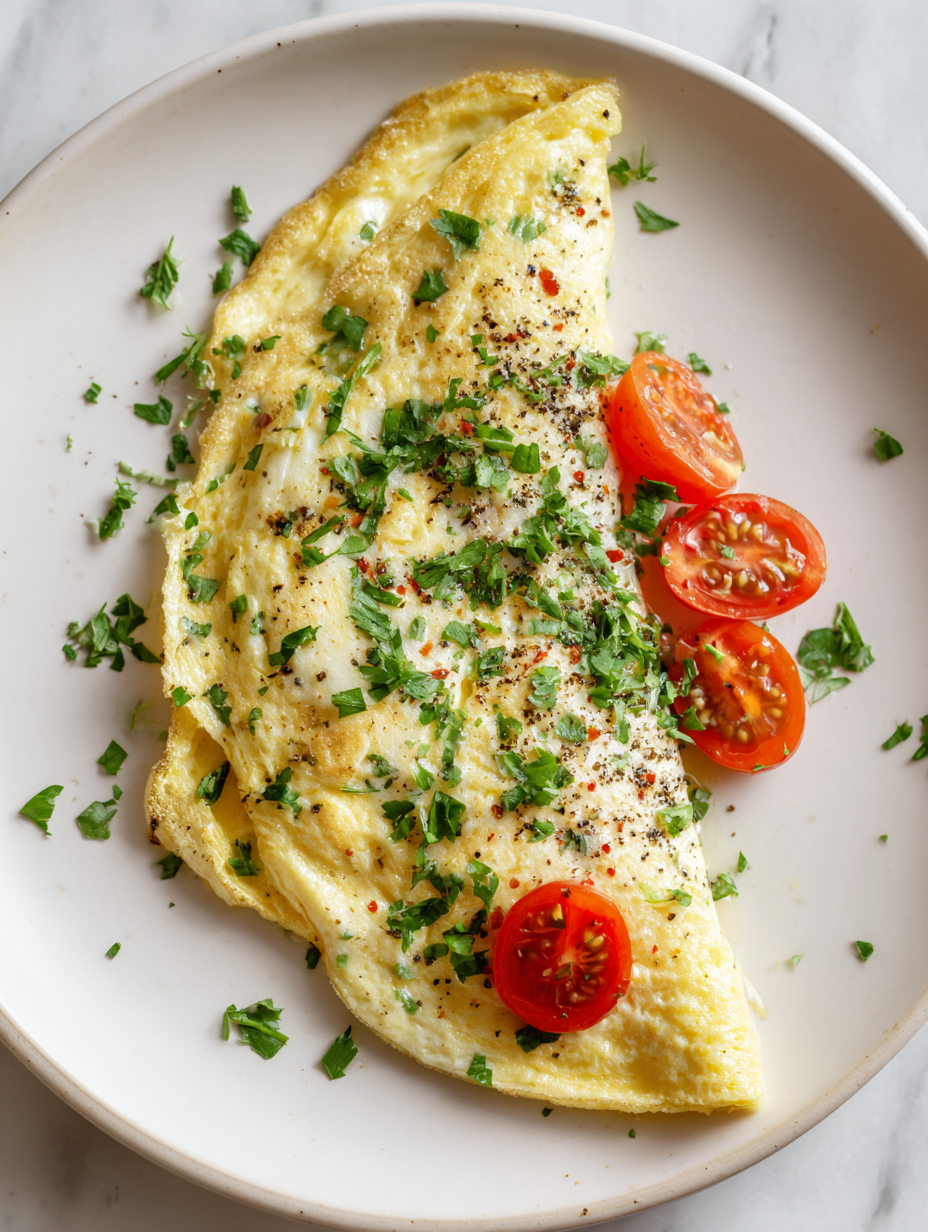
Fluffy Egg White Omelette
Ingredients
Equipment
Method
- Crack the egg whites into a mixing bowl and let them sit at room temperature for about 10 minutes to help achieve better volume.
- Whisk the whites gently with a fork or whisk until they become frothy and slightly bubbly, about 30 seconds. Stop before they form stiff peaks to keep the omelette tender.
- Heat a non-stick skillet over very low heat, approximately 70°C (158°F). Add a teaspoon of oil or butter, swirling to coat the bottom evenly.
- Pour the whipped egg whites gently into the skillet, spreading them out evenly. You should hear a soft sizzle as they begin to set around the edges.
- Allow the whites to cook undisturbed for about 2–3 minutes. You'll see tiny bubbles forming and the whites turning opaque around the edges.
- Use a silicone spatula to gently lift and fold the edges inward, tilting the pan slightly so uncooked whites can flow underneath. Keep the heat low to prevent browning.
- When the surface is mostly set but still slightly shiny and jiggles gently in the center, sprinkle with chopped herbs or cheese if you like. Cover the skillet briefly for about 30 seconds to finish cooking.
- Remove the omelette from the heat once it has a pale, smooth surface with no raw whites visible. Let it rest in the pan for 1 minute to help it settle and retain moisture.
- Gently slide the omelette onto a plate, folding it in half if desired. Garnish with additional herbs or a dash of hot sauce for extra flavor, and serve immediately.
Pro tips for fluffy egg whites
- Bolded mini-head: Gently fold whites → Preserve maximum fluff and airiness, avoid stirring aggressively.
- Bolded mini-head: Use low heat → Prevent browning and keep the omelette tender, patience pays off.
- Bolded mini-head: Whip whites softly → Avoid over-beating, aim for soft peaks to keep the omelette light.
- Bolded mini-head: Add fillings last → Incorporate herbs or cheese just before folding for freshness and minimal moisture.
- Bolded mini-head: Rest briefly after cooking → Let the omelette settle for a minute to lock in moisture and shape.
- Bolded mini-head: Check for jiggle → Slight wobble in the center indicates perfect doneness, not runny or dry.
- Bolded mini-head: Use a non-stick pan → Ensures easy release and even cooking, especially on gentle heat.
Common mistakes and how to fix them
- FORGOT to preheat the skillet, resulting in whites sticking—always warm the pan first.
- DUMPED too much salt in whites, making them rubbery—use sparingly, then adjust seasoning later.
- OVER-TORCHED the omelette, causing dryness—cook on low heat, gentle and slow.
- CRACKED the eggs directly into the pan, risking uneven cooking—whisk separately for better control.
Quick fixes and pantry swaps
- When whites seem watery, splash in a pinch of vinegar to stabilize foam.
- DUMPED too much salt? Rinse whites briefly with cold water before whipping again.
- OVER-TORCHED? Shield with a lid and lower heat immediately to prevent dryness.
- Splash a few drops of water on the omelette to steam and loosen stuck edges.
- Patch a broken omelette by folding in extra herbs or cheese—cover and gently cook for a minute.
Prep, store, and reheat tips
- Pre-whisk egg whites and keep covered in the fridge for up to 24 hours; they’ll be a little less fluffy but still workable.
- Assemble your fillings—chopped herbs, sautéed vegetables—ahead of time, stored in airtight containers for freshness.
- Cooked omelette can be refrigerated for up to 2 days; reheat gently in a non-stick pan or microwave, watching for moisture loss and texture change.
- Reheated omelette may be slightly denser; add a splash of water or broth and cover briefly to revive moisture and softness.
- For best flavor, reheat in short bursts at low power or low heat, until just warmed through, maintaining a light, airy texture.
Top questions about egg white omelette
1. Why do my whites not fluff well?
Use fresh egg whites at room temperature for the best whip and fluffiness. Cold whites whip unevenly and can be denser.
2. How do I avoid over-whipping the whites?
Whisk the whites gently until just frothy, then stop. Over-beating can make the omelette dry and rubbery.
3. What heat should I use for cooking?
Cook on very low heat, around 70°C (158°F), to keep the whites tender and prevent browning or dryness.
4. When should I add fillings?
Add fillings like herbs or vegetables just before folding to keep them fresh and prevent sogginess.
5. What tools work best for flipping?
Use a non-stick skillet and a silicone spatula to gently lift and fold, preventing tears or breaking.
6. Why is my omelette sticking to the pan?
If your omelette sticks, check that the pan is well coated with oil or butter and that the heat is low enough.
7. How do I reheat an omelette without drying it out?
Reheat leftovers gently in the microwave or skillet, adding a splash of water to keep it moist.
8. Can I make this vegan?
Use aquafaba as a vegan substitute—beat chickpea brine until fluffy for a similar airy texture.
9. How much salt should I add?
Too much salt can make whites rubbery; add salt sparingly and season to taste after cooking.
10. My whites are watery, what do I do?
If your whites are watery, add a splash of vinegar to stabilize the foam before whipping.
Making this egg white omelette isn’t just about a healthy start; it’s a quiet act of patience and finesse that rewards you with a delicate, airy bite. It’s a reminder that simplicity in cooking often asks for respect and gentle handling, especially in those hectic mornings.
In a way, it’s become my small daily ritual—an honest, straightforward way to start the day with a bit of focus and care. That light, tender fold of whites feels like a gentle achievement, no matter how busy the hours ahead are.

Hi, I’m Madison Greene, the voice and creator behind Texture Obsessed. Born and raised in the United States, I’ve always believed that food is more than just flavor — it’s about the way it feels.