
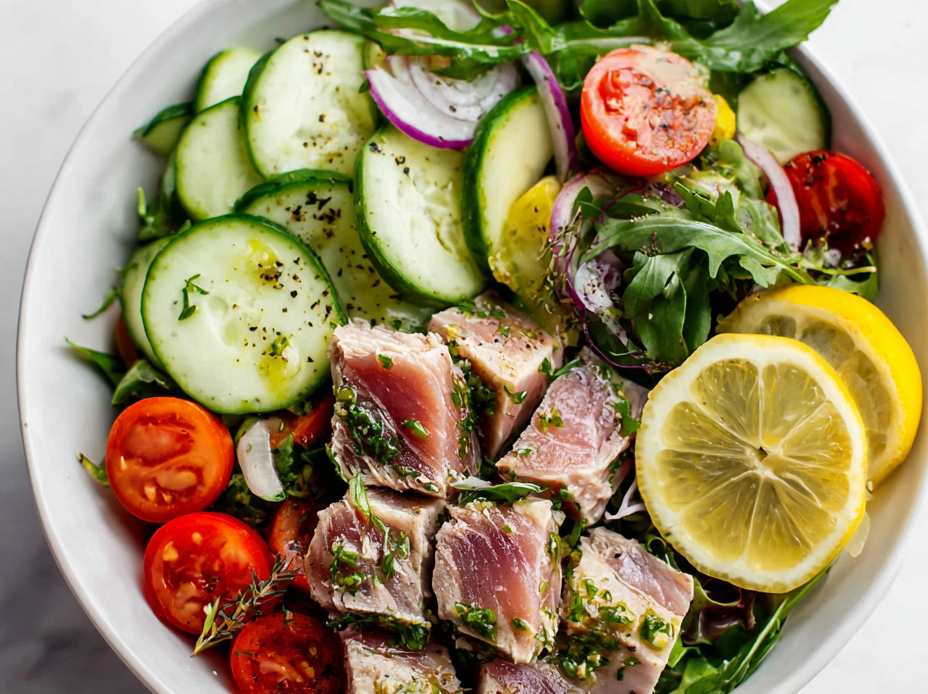
Tuna salad often gets a bad rap for being boring or too simple, but I’ve learned to see it as an opportunity to play with textures. The secret isn’t just in the ingredients but in how they come together—crisp, creamy, tender—all at once. It’s a little chaotic in the best way, like a symphony in your mouth.
My twist is focusing on the interplay of crunch from fresh veggies, richness from good mayo, and a pop of acidity that cuts through. It’s not about over-complicating but about balancing each bite so that every element sings. This recipe is my go-to when I want something quick but with a little more thought behind it.
Focusing on the overlooked art of balancing textures—crisp, creamy, and tender—in tuna salad to elevate its simplicity into a satisfying, multi-sensory experience.
The story behind this recipe
- This tuna salad came from a lazy Sunday afternoon when I was rummaging through the fridge, craving something satisfying but not heavy. I remembered a summer trip where a simple tuna salad was served with some unexpected crunch and zing, and it stuck with me. Ever since, I’ve been trying to recreate that balance — fresh, vibrant, and a little messy.
- It’s one of those dishes that feels like a small act of rebellion — mixing up textures and flavors without overthinking it. Sometimes, I just toss whatever’s in the fridge and hope it works, trusting that honesty in ingredients makes for the best bites. No fuss, no fancy stuff, just a salad that feels like a real meal.
- heading
- story_type
Key ingredients and tips
- Canned tuna: I prefer the chunk light in water—less oily, more neutral, and flakier. Skip the oil-packed for a cleaner, fresher taste that lets other flavors shine.
- Red onion: Thin slices add sharpness and crunch. Rinse them briefly under cold water to tone down the bite if you want milder notes in every bite.
- Celery: Crisp, refreshing, with a faint peppery snap. If you don’t love raw celery, swapping it for chopped fennel adds an anise-like sweetness and crunch.
- Mayonnaise: Creamy, rich, and a little tangy. For a lighter version, try Greek yogurt—just watch it doesn’t turn too tangy or watery, and adjust seasoning accordingly.
- Lemon juice: Brightens everything with zesty, citrusy zing. A squeeze just before serving preserves that fresh, oozy brightness that wakes up the salad.
- Capers: Briny little bursts of salt and tang. If you don’t have capers, chopped green olives work well, adding a similar salty punch without losing that zing.
- Fresh herbs: Parsley or dill—herbs add a fresh, green lift. Use them sparingly if you want a subtler flavor, or heap them on for a garden-fresh aroma that makes the dish pop.
Spotlight on key ingredients
Canned tuna:
- I prefer the chunk light in water—less oily, more neutral, and flakier. Skip the oil-packed for a cleaner, fresher taste that lets other flavors shine.
- Red onion: Thin slices add sharpness and crunch. Rinse them briefly under cold water to tone down the bite if you want milder notes in every bite.
- Celery: Crisp, refreshing, with a faint peppery snap. If you don’t love raw celery, swapping it for chopped fennel adds an anise-like sweetness and crunch.
Lemon juice & herbs:
- Lemon juice: Brightens everything with zesty, citrusy zing. A squeeze just before serving preserves that fresh, oozy brightness that wakes up the salad.
- Mayonnaise: Creamy, rich, and a little tangy. For a lighter version, try Greek yogurt—just watch it doesn’t turn too tangy or watery, and adjust seasoning accordingly.
- Fresh herbs: Parsley or dill—herbs add a fresh, green lift. Use them sparingly if you want a subtler flavor, or heap them on for a garden-fresh aroma that makes the dish pop.
Notes for ingredient swaps
- Canned tuna: I prefer chunk light in water—less oily, more neutral, and flakier. Skip the oil-packed for a fresher, cleaner taste that lets other flavors shine.
- Red onion: Thin slices add sharpness and crunch. Rinse under cold water briefly if you want milder, less pungent notes.
- Celery: Adds crispness and a slight peppery bite. If raw isn’t your thing, try chopped fennel for a subtle anise flavor and crunch.
- Mayonnaise: Creamy and tangy, but for a lighter touch, Greek yogurt works—just watch for extra tang or watery consistency, adjust seasonings.
- Lemon juice: Brightens and freshens with a citrus punch. Use it just before serving to keep that oozy, zesty vibrancy.
- Capers: Briny and sharp, they add salt and zing. Chopped green olives are a good swap, offering a similar salty burst without the pickled flavor.
- Fresh herbs: Parsley or dill lift the salad with green freshness. Use sparingly for subtlety or heap on for a garden-fresh aroma that enhances every bite.
Equipment & Tools
- mixing bowl: Combine and mix ingredients thoroughly.
- fork: Flake tuna and mix ingredients gently.
- sharp knife: Dice vegetables precisely.
- chopping board: Provide a stable surface for chopping.
- salad spoon: Serve or transfer the finished salad.
Step-by-step guide to tuna salad
- Gather your equipment: a mixing bowl, a fork, a sharp knife, a chopping board, and a salad spoon. The bowl is for mixing, the fork for flaking tuna, and the knife for prep.
- Drain the canned tuna thoroughly, then transfer to the bowl. Use a fork to flake it into bite-sized pieces, breaking up any large chunks.
- Finely dice the red onion (about 2 tablespoons). Rinse briefly under cold water if you want less bite, then add to the tuna.
- Chop the celery (about 1/4 cup) into thin slices or small dice. Toss into the bowl for crunch and freshness.
- Add 2 tablespoons of mayonnaise to the bowl. Mix gently until the tuna is coated but not mushy. Adjust mayo for creaminess.
- Squeeze in half a lemon (about 1 tablespoon of juice). Stir again, tasting for brightness. Add more lemon if needed.
- Season with salt and freshly ground black pepper to taste. Mix well to distribute flavors evenly.
- Taste and adjust: if it’s too dry, add a spoon of mayo; if too bland, a splash more lemon or salt.
- Let the salad sit for 10 minutes at room temp to meld flavors, or cover and refrigerate for up to an hour for a chilled version.
- Plate the tuna salad in a bowl or on a bed of greens. Garnish with extra herbs if desired. Serve with crusty bread or crackers.
Let the salad rest for 10 minutes at room temperature to develop flavors. Taste again, adjust seasoning if needed, then serve chilled or at room temp. Garnish with herbs if desired.
How to Know It’s Done
- Tuna flakes easily and is not clumpy, with a fresh aroma.
- Onions are tender and slightly translucent, with a mild sharpness.
- Salad is evenly coated with mayo, creamy but not greasy.
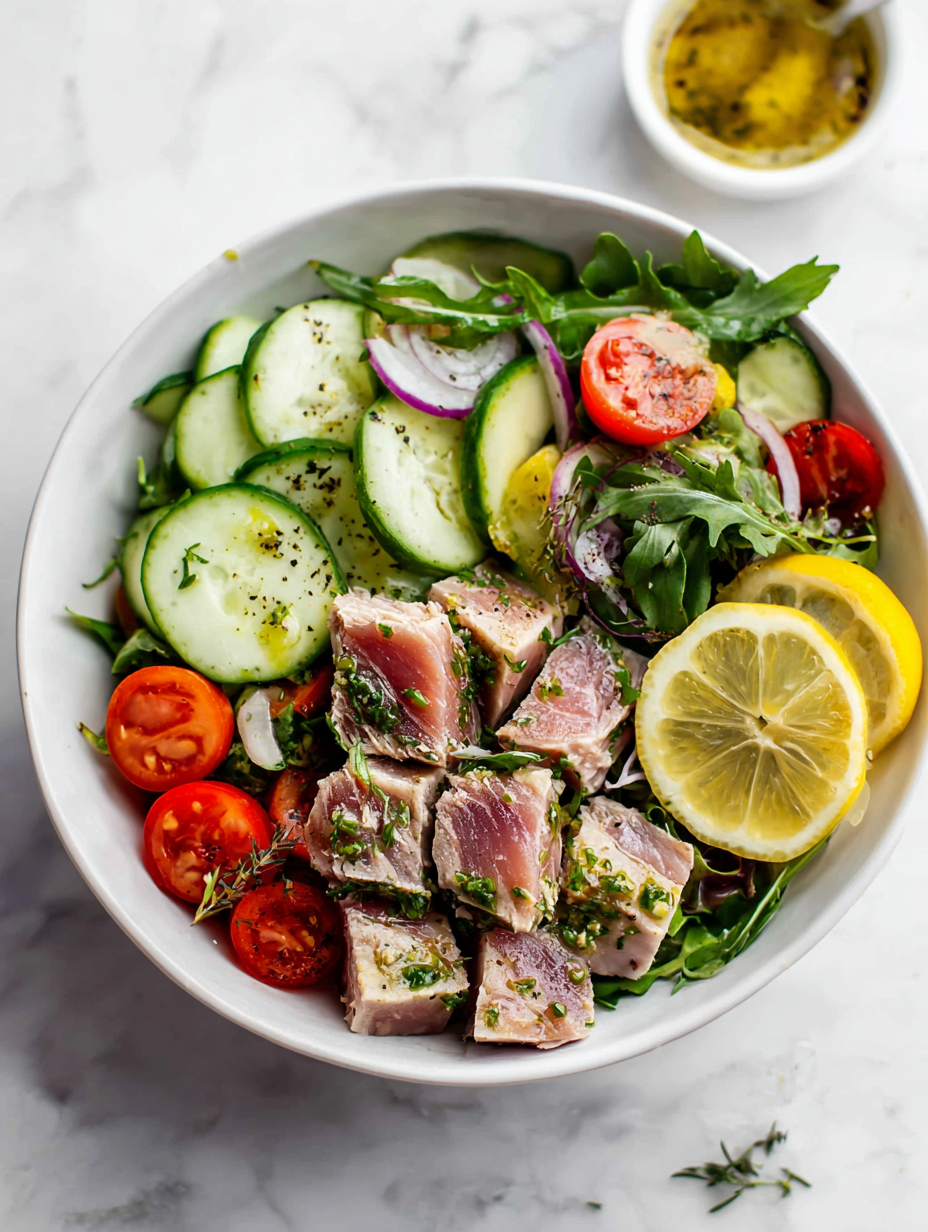
Balanced Tuna Salad
Ingredients
Equipment
Method
- Drain the canned tuna thoroughly, then transfer it to a large mixing bowl. Use a fork to gently flake the tuna into large, flaky pieces, avoiding over-mashing.
- Add the finely diced red onion to the bowl. Rinse briefly under cold water if you prefer a milder flavor, then mix it into the tuna to distribute evenly.
- Sprinkle in the chopped celery, which will add a crisp, refreshing crunch. Stir it into the mixture to combine all the textures.
- Spoon in the mayonnaise and gently fold it into the mixture. Stir until the tuna and vegetables are evenly coated, creating a creamy base.
- Squeeze fresh lemon juice into the bowl and stir again. This brightens the flavors and adds a zesty pop that cuts through the richness.
- Stir in the chopped capers or green olives for a briny, tangy burst. Season with salt and freshly ground black pepper to taste.
- Gently fold in chopped fresh herbs if using, for a fresh, aromatic finish. Taste and adjust seasoning if needed.
- Let the salad sit for about 10 minutes at room temperature to allow flavors to meld. Alternatively, refrigerate for up to an hour for a chilled, more cohesive dish.
- Serve the tuna salad in a bowl or on a bed of greens, garnished with extra herbs if desired. Pair with crusty bread or crackers for a complete meal.
Notes
Pro tips for perfect tuna salad
- Chill your tuna briefly before mixing—keeps the salad firm and prevents it from becoming mushy.
- Use a fork to flake tuna gently—preserves its flaky texture and avoids breaking it into too small pieces.
- Mix ingredients slowly and gently—keeps the tuna in large, satisfying flakes rather than breaking into a paste.
- Add lemon juice just before serving—brightens flavors and keeps the salad from becoming dull or watery.
- Taste and adjust seasoning after resting—flavors meld, so tweak salt, pepper, or acidity for balance.
- For extra crunch, toss in toasted nuts or seeds—introduces a new texture layer that complements the tuna’s tenderness.
- Serve on a bed of greens or with crusty bread—enhances texture contrast and makes each bite more satisfying.
Common Tuna Salad Mistakes
- FORGOT to drain tuna thoroughly → Do it to avoid watery salad.
- DUMPED all mayo at once → Add gradually for desired creaminess.
- OVER-TORCHED onions → Sauté until translucent, not caramelized.
- MISSED resting time → Let salad sit 10 minutes for flavors to meld.
Quick fixes and pantry swaps
- When salad is watery, splash in a little extra lemon juice to brighten and tighten textures.
- If mayo separates, patch it with a quick spoon of Greek yogurt for creaminess.
- Splash cold water on over-sautéed onions to tone down bitterness and restore crunch.
- When tuna isn’t flaky enough, rescue with a fork and gentle pressing to re-flake easily.
- If ingredients seem dull, shield with a squeeze of lemon and a pinch of salt right before serving.
Prep and store tips
- Prep the tuna salad ingredients—dice, chop, and measure—up to 1 day in advance for quick assembly later. Keep covered in the fridge; flavors deepen overnight.
- Store the assembled salad in an airtight container for up to 24 hours. Expect some separation; give it a gentle stir before serving to rediscover that creamy texture.
- Shelf life is best within a day or two. After that, the veggies may lose crunch, and mayo might start to break down, so aim to eat it fresh for optimal sensory notes.
- Refrigerate and serve chilled. If needed, add a splash of lemon or fresh herbs just before serving to revive brightness and aroma. Avoid reheating—it’s meant to be cold or at room temp, not warm.
Top questions about tuna salad
1. Can I substitute Greek yogurt for mayo?
Yes, using Greek yogurt instead of mayo makes it lighter, but it changes the creamy texture slightly.
2. What are good substitutes for celery in tuna salad?
Definitely, try chopped fennel or cucumber for a fresh twist that adds crunch and subtle flavor.
3. How long does tuna salad last in the fridge?
To keep it fresh, store in an airtight container in the fridge for up to 24 hours, but best within 12.
4. When should I add lemon juice to tuna salad?
Add lemon juice just before serving to keep the flavor bright and prevent the salad from becoming watery.
5. How do I prevent my tuna salad from being watery?
Drain the tuna thoroughly to avoid a watery salad; pressing gently with a fork helps remove excess moisture.
6. Which type of tuna is best for salad?
Use chunk light tuna packed in water for a flakier, less oily texture that blends better with other ingredients.
7. How should I mix tuna salad to keep it nice?
Over-mixing can break up the tuna too much, making it mushy. Mix gently to keep flakes intact.
8. How can I add more crunch to my tuna salad?
For extra crunch, add toasted nuts or crispy capers just before serving to enhance textures.
9. Can I make tuna salad ahead of time?
Yes, you can prepare the ingredients ahead; keep chopped veggies and tuna separately until ready to assemble.
10. What if my tuna salad tastes bland?
If it tastes dull, a squeeze of lemon or a pinch of salt can revive the flavors just before serving.
This tuna salad is a reminder that simple ingredients, when balanced with care, can become something more satisfying than their parts. It’s perfect for those quick lunches or a light dinner when you want flavors that hit all the right notes—bright, crunchy, and creamy.
In a world where everything moves fast, taking a moment to focus on texture and freshness makes all the difference. It’s a dish that keeps me grounded, reminding me that good food doesn’t have to be complicated—just honest and well-made.

Hi, I’m Madison Greene, the creator behind Texture Obsessed. If you have ever fallen in love with the crunch of a perfectly toasted crust, the silkiness of a smooth custard, or the contrast between crispy and creamy in a single bite, then you already understand what inspires me.