
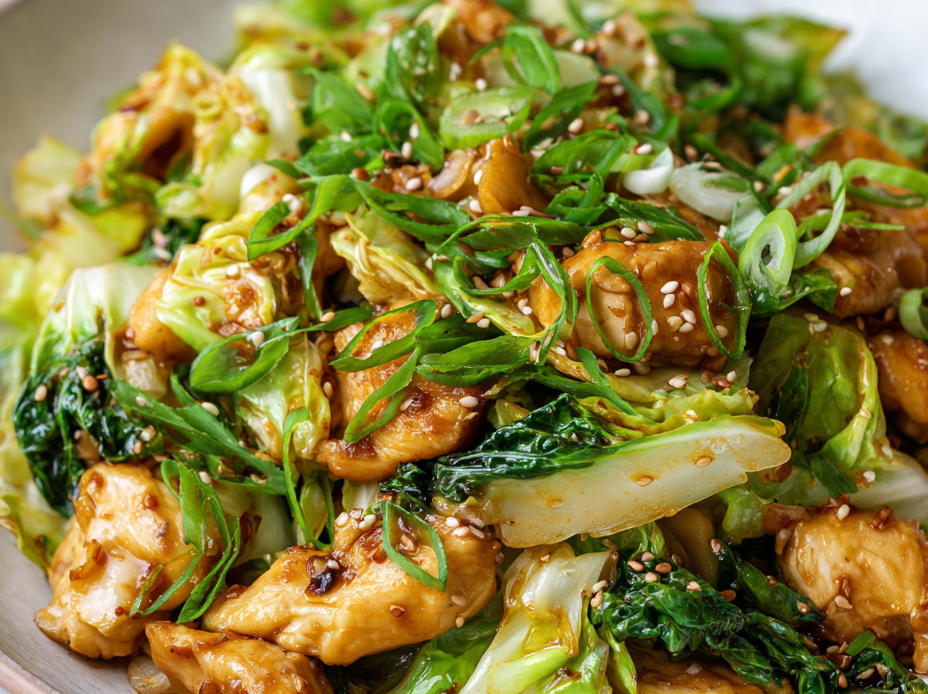
This stir-fry idea came from a simple craving to really understand how raw cabbage changes under heat. Most of us toss it in salads or slaw, but I noticed its texture and flavor evolve so much when cooked just right. That crunch that bites back at first softens but keeps a little jiggle, adding a surprising layer to the dish.
Cooking it this way feels like a small act of rebellion — giving cabbage a starring role instead of a background veggie. It’s quick, honest, and it demands you pay attention to timing and heat. When the chicken and cabbage come together with a splash of soy and a hint of garlic, it’s a reminder that simple ingredients can surprise you with their versatility.
Focusing on the often overlooked crunch of raw cabbage and how it transforms during stir-frying, this recipe celebrates the textural journey from crisp to tender, highlighting the importance of timing and heat for perfect bite.
Celebrating cabbage’s transformation
- Watching the cabbage’s color shift from crisp white to tender, slightly caramelized edges always feels like a small victory.
- There’s a quiet thrill in getting the chicken perfectly browned—crispy on the outside, juicy inside—before tossing in the cabbage.
- I love how this dish reminds me of lazy weekend mornings when I used to cook for my family, filling the kitchen with garlic and soy.
- This stir-fry is my go-to when I crave something quick but satisfying, and it never fails to make me feel grounded.
- Every time I cook this, I remember the first time I nailed the timing—crunchy cabbage with a smoky edge—made me proud.
The story behind this recipe
This dish sprouted from a moment of realizing how cabbage’s texture can be a playground, not just a sidekick. I wanted to see if I could coax out its natural sweetness and crunch without losing that fresh bite. It’s a reminder that even the simplest ingredients can surprise us, if you give them enough attention and respect in the pan. Plus, I love how it feels like a little secret—something hearty and crisp that sneaks onto your plate unexpectedly.
Contextual origin and trivia
- This stir-fry technique emphasizes preserving the cabbage’s initial crunch, a trait often overlooked in cooked dishes.
- Cabbage has been a staple in Asian cuisines for centuries, valued for its texture and ability to absorb flavors quickly.
- The modern stir-fry method was popularized in the 20th century, adapting traditional Chinese cooking for home kitchens worldwide.
- Using cabbage in quick-cook recipes like this highlights its versatility—raw, tender, or crispy—depending on heat and timing.
Key ingredients and tips
- Chicken breast: I prefer boneless, skinless for quick cooking and tenderness. You can swap with thighs for more flavor, but watch the cook time—thighs stay juicier.
- Cabbage: The crunch of fresh cabbage is my favorite part. Use green or Napa for different textures—Napa adds a softer, silkier bite, which can mellow the overall dish.
- Garlic: It’s the backbone of flavor. I like plenty—smells like heaven when it hits the hot oil—but you can cut back if you’re sensitive to garlic’s punch.
- Soy sauce: A splash adds that deep, salty umami. Tamari works well for gluten-free, but it’s slightly richer in flavor—adjust salt accordingly.
- Sesame oil: Just a drizzle at the end for that nutty aroma and shine. Too much can overpower, so keep it subtle—think of it as a finishing note.
- Cooking oil: I use neutral oil like vegetable or canola for high heat. For a nuttier flavor, try toasted sesame oil, but be cautious—it’s potent.
- Optional: Chili flakes or fresh ginger can brighten or heat things up. I toss in a pinch for a little chaos, but keep it balanced to let the cabbage shine.
Spotlight on key ingredients
Chicken breast:
- I prefer boneless, skinless for quick cooking and tenderness. You can swap with thighs for more flavor, but watch the cook time—thighs stay juicier.
- Cabbage: The crunch of fresh cabbage is my favorite part. Use green or Napa for different textures—Napa adds a softer, silkier bite, which can mellow the overall dish.
Cabbage:
- The crunch of fresh cabbage is my favorite part. Use green or Napa for different textures—Napa adds a softer, silkier bite, which can mellow the overall dish.
- Garlic: It’s the backbone of flavor. I like plenty—smells like heaven when it hits the hot oil—but you can cut back if you’re sensitive to garlic’s punch.
Notes for ingredient swaps
- Protein: Swap chicken for firm tofu—keeps it vegetarian, but expect a softer bite and less juiciness.
- Cabbage: Use kale or bok choy for a different leafy crunch—kale adds a slightly bitter edge, bok choy a milder, silkier texture.
- Soy sauce: Tamari offers a gluten-free alternative with a richer, less salty flavor—adjust seasoning as needed.
- Sesame oil: Try toasted walnut oil for a nuttier aroma, but use sparingly—it’s more intense than sesame.
- Oil: Switch to peanut or avocado oil for higher smoke points and subtle flavor, especially if you like a richer aroma.
- Garlic: Use garlic paste or roasted garlic for a mellower, sweeter flavor—perfect when fresh is too pungent.
- Add-ins: Chili paste or sriracha can spice things up, or omit for a milder, more kid-friendly dish.
Equipment & Tools
- Large wok or wide skillet: Ensures even heat and easy tossing of ingredients.
- Spatula or tongs: To stir and flip ingredients quickly.
- Sharp knife: For precise slicing of chicken and cabbage.
- Cutting board: Prepares ingredients efficiently.
- Measuring spoons: To add soy sauce and sesame oil accurately.
Step-by-step guide to stir-frying
- Equipment & Tools: Use a large wok or wide skillet for even heat and tossing. Keep a spatula or tongs handy for quick movements.
- Prep the ingredients: Slice chicken into thin strips, about 1 cm wide. Chop cabbage into bite-sized pieces, roughly 2-3 cm. Mince 2 cloves garlic. Measure out soy sauce and sesame oil.
- Heat the pan: Place over medium-high heat (~200°C / 392°F). Add 1 tbsp neutral oil. Wait until shimmering and slightly smoky — that’s your cue to cook.
- Cook the chicken: Spread chicken strips evenly. Sear undisturbed for 2-3 minutes until edges are golden. Flip and cook another 2 minutes. Remove and set aside.
- Stir-fry the garlic: In the same pan, add a little more oil if needed. Add minced garlic. Sizzle for 15-20 seconds until fragrant and slightly golden. Watch for burnt bits—reduce heat if necessary.
- Add cabbage: Toss in the chopped cabbage. Stir quickly to coat in garlic and oil. Cook for 2-3 minutes, stirring frequently, until cabbage just starts to soften but remains crisp and vibrant green.
- Combine chicken & cabbage: Return chicken to pan. Mix well. Drizzle with 1 tbsp soy sauce and a splash of sesame oil. Cook for another 1-2 minutes, until flavors meld and cabbage edges are lightly caramelized.
- Final checks: The cabbage should have a slight jiggle but be tender. Chicken should be juicy and browned. The aroma should be smoky with hints of garlic and soy.
- Rest & plate: Turn off heat. Let sit for 30 seconds to settle flavors. Serve hot directly from the pan, garnished with sesame seeds or scallions if desired.
Serve immediately from the pan, garnished if desired. Let sit for 30 seconds to let flavors settle before plating. A quick drizzle of sesame oil at the end adds shine and aroma.
How to Know It’s Done
- Cabbage has a slight jiggle but no raw crunch.
- Chicken is browned and no pink remains inside.
- The dish emits a fragrant, smoky aroma with hints of garlic and soy.
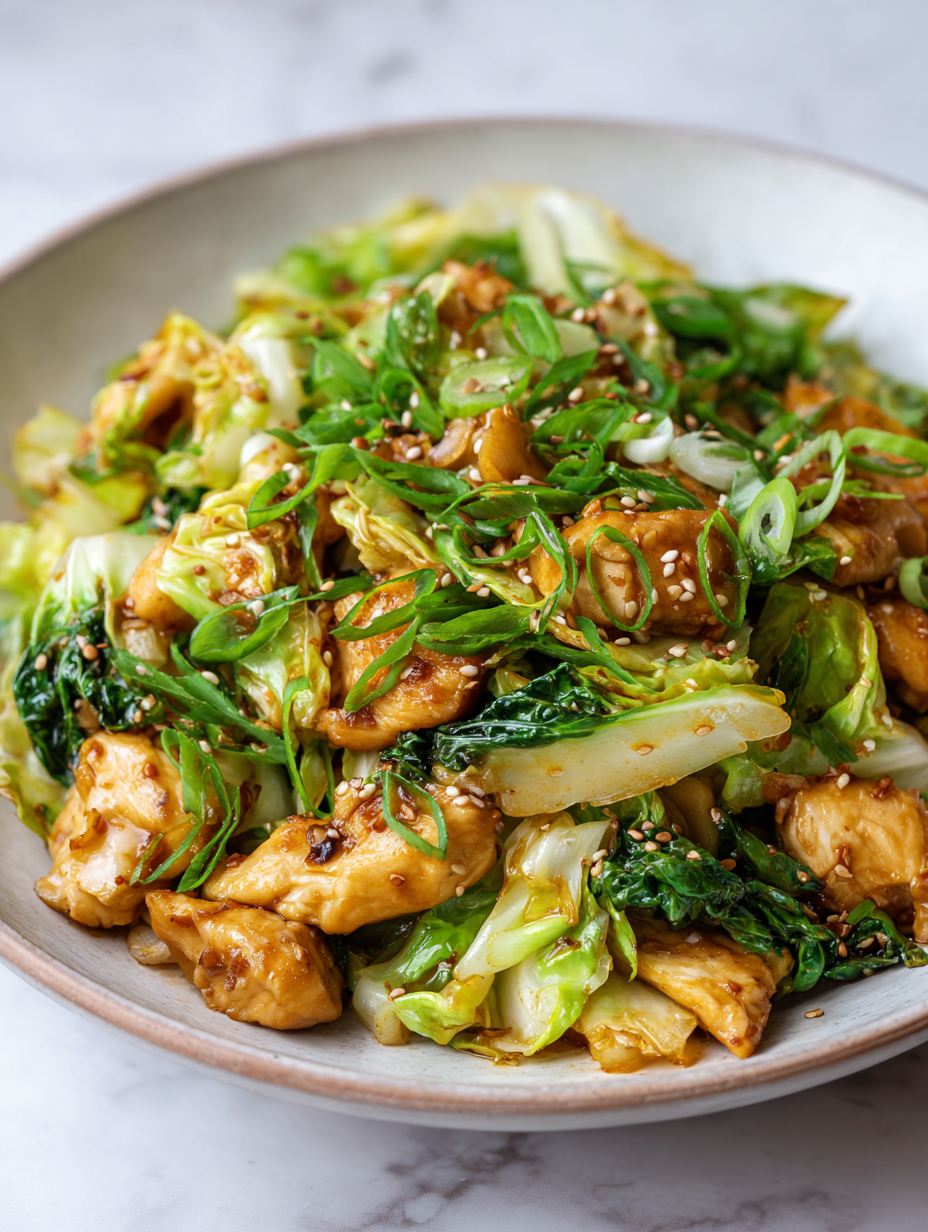
Chicken and Cabbage Stir-Fry
Ingredients
Equipment
Method
- Start by slicing the chicken breasts into thin strips, about 1 centimeter wide, and chop the cabbage into bite-sized pieces. Mince the garlic cloves and measure out the soy sauce and sesame oil.
- Heat your large wok or wide skillet over medium-high heat until shimmering and slightly smoky, then add one tablespoon of neutral oil. Wait until the oil is hot and ripples gently, indicating it's ready.
- Spread the chicken strips evenly in the pan, letting them sear undisturbed for about 2-3 minutes until the edges turn golden brown and crispy. Flip the pieces and cook for another 2 minutes until cooked through and juicy. Remove the chicken and set aside.
- In the same hot pan, add a little more oil if needed, then toss in the minced garlic. Sizzle for about 15-20 seconds until fragrant and lightly golden, filling the kitchen with a rich aroma.
- Add the chopped cabbage to the pan, stirring quickly to coat it in garlic and oil. Cook for 2-3 minutes, stirring frequently, until the cabbage just begins to soften but still retains a slight crunch and vibrant green color.
- Return the browned chicken to the pan, mixing everything well so the flavors combine. Pour in the soy sauce and add a splash of sesame oil, stirring to coat the ingredients evenly. Continue cooking for another 1-2 minutes until the cabbage edges are lightly caramelized and everything is heated through.
- Turn off the heat and let the stir-fry sit for 30 seconds, allowing the flavors to settle. The cabbage should have a slight jiggle but be tender, with the chicken crispy and juicy. The dish emits a smoky, savory aroma, ready to serve hot from the pan.
Pro tips for perfect stir-fry
- Bolded mini-head: Use high heat to get a quick sear—smoke and crackle are signs it’s ready.
- Bolded mini-head: Keep ingredients moving—constant stirring prevents burning and ensures even cooking.
- Bolded mini-head: Add cabbage in stages if needed—start with a quick toss, then let it soften for texture.
- Bolded mini-head: Taste and adjust soy early—saltyness intensifies as it cooks, so go easy at first.
- Bolded mini-head: Finish with sesame oil off heat—its delicate nutty aroma blooms when added last.
- Bolded mini-head: For extra crispness, toss in a splash of cold water during stir-fry—creates steam and keeps cabbage lively.
- Bolded mini-head: Use a wide pan to maximize surface area—helps ingredients brown evenly and develop flavor.
Common mistakes and how to fix them
- FORGOT to preheat pan → Always preheat until shimmering before adding ingredients.
- DUMPED too much oil → Use just enough to coat the pan; excess causes sogginess.
- OVER-TORCHED the cabbage → Stir frequently; reduce heat if edges burn or blacken.
- USED cold chicken → Let cooked chicken rest and come to room temp before stir-frying.
Quick fixes and pantry swaps
- When sauce is too thick → Splash in a bit of water or broth, stir, and simmer briefly.
- If cabbage is limp → Increase heat slightly and cook for an extra minute for a quick revive.
- Splash soy too salty → Add a squeeze of lemon or a pinch of sugar to balance flavors.
- When chicken is unevenly cooked → Cover pan and cook on medium-low for a few more minutes.
- Patch overcooked cabbage → Add a fresh squeeze of lemon; it brightens and restores some crunch.
Prep, store, and reheat tips
- Chop the cabbage and chicken in advance; store in airtight containers for up to 24 hours. The crunch stays lively and fresh when refrigerated properly.
- Prepare the garlic and measure out soy sauce and sesame oil ahead. Keep ingredients separate to preserve their flavors and aromas.
- Refrigerate cooked chicken for up to 3 days; reheat gently to avoid drying out, aiming for a warm, tender bite with a slight crackle.
- This stir-fry is best enjoyed fresh, but leftovers can last in the fridge for 1-2 days. Expect some cabbage to soften further and flavors to meld.
- Reheat in a hot skillet or wok over medium-high heat, stirring constantly. Look for the cabbage to regain some crispness and the aroma to perk up.
Top questions about Chicken Cabbage Stir Fry
1. How do I keep the cabbage crunchy?
Use a large, hot pan to get that quick sear and keep the cabbage crisp. Don’t overcrowd, or it’ll steam instead of fry.
2. What’s the best way to cook tender chicken for this dish?
Slice the chicken thinly and cook it quickly over high heat until golden outside and juicy inside. Rest briefly before chopping if needed.
3. How do I balance the soy sauce flavor?
Add soy sauce gradually, tasting as you go. It deepens flavor and prevents oversalting. Finish with a splash of sesame oil for aroma.
4. When do I add garlic for maximum flavor?
Use fresh garlic and add it just before the cabbage. It should sizzle and smell fragrant, not burnt. Burnt garlic turns bitter fast.
5. How long should I stir-fry the cabbage?
Stir frequently once the cabbage hits the pan. Watch for edges to turn lightly caramelized but not burnt—about 2-3 minutes.
6. What temperature should the pan be?
Keep the heat high, around 200°C (392°F), to get that quick, smoky sear. Lower heat will leave it soggy or bland.
7. What oil is best for stir-frying?
Use neutral oil like vegetable or canola for high heat. For extra flavor, a splash of toasted sesame oil at the end works beautifully.
8. Can I prep this dish ahead?
Prepare all ingredients beforehand—this dish cooks fast. Chop chicken and cabbage, measure sauces, and have tools ready.
9. How long does it keep in the fridge?
Refrigerate leftovers in an airtight container for up to 2 days. Reheat in a hot pan, stirring until steaming and fragrant again.
10. What if my cabbage turns soggy?
If cabbage gets limp, boost the heat and stir vigorously for a minute. A splash of water can help revive some crunch.
This stir-fry isn’t just about quick cooking; it’s about respecting each ingredient’s character, especially cabbage’s. When you get the timing right, the aroma of garlic, soy, and smoky cabbage will fill your kitchen and make the simple act of eating feel a little more intentional.
In a world that often rushes past flavor, this dish offers a moment to pause—crisp, tender, and bright. It’s a reminder that even everyday ingredients can surprise us when treated with patience and a bit of heat.

Hi, I’m Madison Greene, the creator behind Texture Obsessed. If you have ever fallen in love with the crunch of a perfectly toasted crust, the silkiness of a smooth custard, or the contrast between crispy and creamy in a single bite, then you already understand what inspires me.