
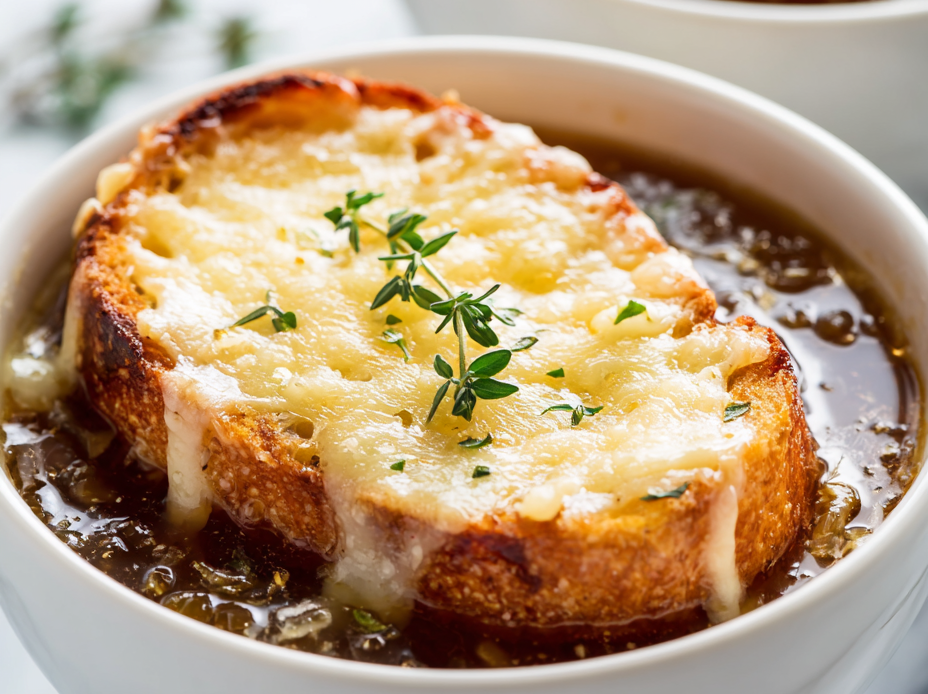
Focusing on the caramelization process, this French Onion Soup journey is about more than just the ingredients. It’s about patience, watching onions slowly turn sweet and golden, like a quiet meditation in the kitchen. That deep, smoky aroma filling the air is a reminder that good things take time, and that the humble onion can carry so much flavor when given enough love.
There’s something almost poetic about transforming a simple, often overlooked vegetable into a rich, soulful broth. This recipe is my way of celebrating the quiet magic of patience—how slow caramelization creates a foundation that’s both comforting and layered with complexity. It’s a dish that invites you to slow down and savor every step, every sniff, every bubbling spoonful.
Focusing on the caramelization process and how it transforms humble onions into a rich, sweet foundation, I explore how the slow build-up of flavor mirrors life’s patient, layered unfolding. This recipe isn’t just about making soup; it’s about embracing the little moments of patience that deepen flavor and soul.
The layered patience of caramelized onions
- The slow caramelization of onions always feels like a small act of patience that pays off in the deepest flavor.
- I love how this soup brings back memories of my grandmother’s kitchen, filled with the smell of toasted bread and melting cheese.
- There’s a quiet pride in mastering a perfect caramelized onion—it’s a simple step but makes all the difference.
- Sometimes, I get lost in the process, watching the onions turn from translucent to a rich, amber hue—it’s oddly calming.
- This dish is a reminder that the best things in life often come from taking your time and paying attention to the little details.
The story behind this recipe
- Making this soup was born out of a quiet weekend in a small kitchen, where I was craving something warm but didn’t want the usual. I started caramelizing onions just as the rain started tapping on the window, and I remember thinking how this simple process is like a slow, forgiving meditation. The smell that filled the room—sweet, smoky, a little tangy—made me realize that simple ingredients, treated with patience, can create something unexpectedly soulful.
- Over the years, I’ve come to see this dish as a kind of culinary therapy. It’s not just about the taste but about the ritual—peeling, slicing, watching those onions soften and darken, stirring steadily to coax out their deepest flavor. It’s a reminder that good things don’t rush; they develop, layer by layer, in their own time.
- heading: The story behind this recipe
French Onion Soup Trivia
- French Onion Soup dates back to Roman times, where ancient Romans enjoyed onion-based broths as hearty, humble fare.
- The modern version gained popularity in Parisian bistros in the 18th century, where caramelized onions became the star ingredient.
- Traditionally, the soup was served with toasted bread and melted Gruyère, a combination that’s become iconic in French cuisine.
- The technique of caramelizing onions slowly over low heat is key—originally, cooks used just onions, water, and bread, before cheese became a staple.
- In France, this dish was once considered peasant food, but it’s now celebrated as a sophisticated comfort classic worldwide.
Key Ingredients and Tips
- Onions: I prefer yellow onions—they turn sweet and become silky when caramelized, but white or red can add subtle variation in sweetness and color if you want. Watch out for burning the edges; stir often.
- Beef broth: Rich, savory, with a deep umami punch. If you want a lighter vibe, chicken broth works well, although it’s milder and less robust. Use homemade if you can—nothing beats that fresh, meaty aroma.
- Butter: I love the richness it adds during caramelization—makes the onions glossy and flavorful. If you’re dairy-free, try olive oil for a lighter, fruitier note, but don’t expect quite the same depth.
- Garlic: Adds a punch of sharp aroma. Use fresh cloves; roasted garlic would be a nice twist if you want a mellow, sweet undertone. Be careful not to burn it—garlic turns bitter quickly.
- Gruyère cheese: Melts into that gooey, nutty topping that makes the whole thing irresistible. For a sharper bite, try Comté or Emmental. If dairy-free, a sprinkle of nutritional yeast can add a cheesy umami, though it’s not the same.
- French bread: Toasted slices are essential—they soak up the broth and add crunch. A baguette is classic, but sourdough slices give a tangy counterpoint. Don’t skip the toasting; soggy bread ruins the texture.
- Thyme: Fresh sprigs bring a bright, earthy aroma that lifts the broth. Dried thyme is fine in a pinch, but it’s not quite as lively. Add toward the end to keep the herb’s brightness.
Spotlight on key ingredients
Onions:
- I love yellow onions—they caramelize into a sweet, silky base. Watch for burning edges and stir often.
- Their natural sugars develop slowly, creating a deep, amber hue and rich aroma that fills the kitchen.
Gruyère cheese:
- Gruyère: Melts into a gooey, nutty topping that’s golden and slightly crispy. Sharpens with age, so choose a good quality block.
- Gruyère: Its meltability is perfect for broiling—watch closely to prevent burning, aiming for bubbly, golden perfection.
Notes for ingredient swaps
- Dairy-Free: Swap butter for olive oil or coconut oil; it won’t caramelize quite the same, but still good for a lighter touch.
- Vegetarian: Use vegetable broth instead of beef; the sweetness of the onions still shines through, just a tad lighter.
- Gluten-Free: Replace traditional baguette with gluten-free bread slices; toast them well to maintain crunch, though texture may vary.
- Cheese Alternatives: Nutritional yeast or vegan cheese can mimic that cheesy, melty top, but won’t have the same nutty complexity.
- Onions: Red onions can add a slightly sharper flavor and vibrant color, though they won’t caramelize quite as sweetly as yellow ones.
- Broth: Mushroom broth offers an earthy depth that pairs beautifully with caramelized onions—just watch for a stronger umami punch.
- Herbs: Fresh thyme is classic, but rosemary or a bay leaf can add different aromatic layers—use sparingly to avoid overpowering.
Equipment & Tools
- Large heavy-bottomed pot or Dutch oven: Ensure even heat for slow caramelization
- Wooden spoon: Stir onions gently and scrape browned bits
- Sharp knife and cutting board: Slice onions thinly and evenly
- Ovenproof bowls: Serve and broil the soup with cheese topping
- Baking sheet: Hold bowls during cheese melting
- Toaster or oven: Toast bread slices to crispy perfection
Step-by-step guide to French Onion Soup
- Equipment & Tools: Get a large heavy-bottomed pot or Dutch oven for even heat, a wooden spoon for stirring, a sharp knife and cutting board for slicing onions, and a ladle for serving.
- Slice onions thinly—about 1/8 inch. Use a sharp knife to avoid tears and uneven slices.
- Heat the pot over medium-low (about 150°C/300°F). Add butter and a splash of olive oil to prevent burning.
- Add onions and a pinch of salt. Cook slowly, stirring every 5–7 minutes. Aim for a gentle sizzle, not a crackle. After 20–30 minutes, onions should turn a deep amber, sweet aroma filling the kitchen.
- If onions start sticking or burning, reduce heat and add a splash of water or broth to deglaze. Scrape up browned bits for flavor.
- Once onions are caramelized, add minced garlic and cook for 1–2 minutes until fragrant, avoiding burning garlic which turns bitter.
- Pour in beef broth (about 1.5 liters). Bring to a gentle simmer, uncovered, for 15–20 minutes. Stir occasionally, checking for a rich, dark color and deep aroma.
- Taste and adjust salt or add a splash of wine or sherry if desired. Remove thyme sprigs if used. Ladle soup into ovenproof bowls.
- Preheat oven to 200°C/390°F. Slice baguette or sourdough, toast until golden, about 8–10 minutes. Rub with a garlic clove if you like extra flavor.
- Top each bowl with toasted bread slices and a generous handful of grated Gruyère. Place bowls on a baking sheet.
- Bake in the oven for 10–15 minutes until cheese is bubbly and golden brown. Watch closely to avoid burning the cheese.
- Remove from oven. Let sit for 2–3 minutes—hot cheese can be tricky. Check that the cheese is melted, bubbling, and slightly browned.
- Finish with a sprinkle of fresh thyme or black pepper. Serve immediately with a crusty piece of bread for dipping.
Ladle hot soup into bowls, top with toasted bread and cheese. Broil until bubbly and golden, about 10–15 minutes. Rest 2–3 minutes before serving. Serve with extra bread on the side.
How to Know It’s Done
- Onions are deeply caramelized and fragrant, with a rich amber color.
- Broth is dark, concentrated, and aromatic, not watery or dull.
- Cheese is bubbly, golden, and gooey, with a slight crisp edge.
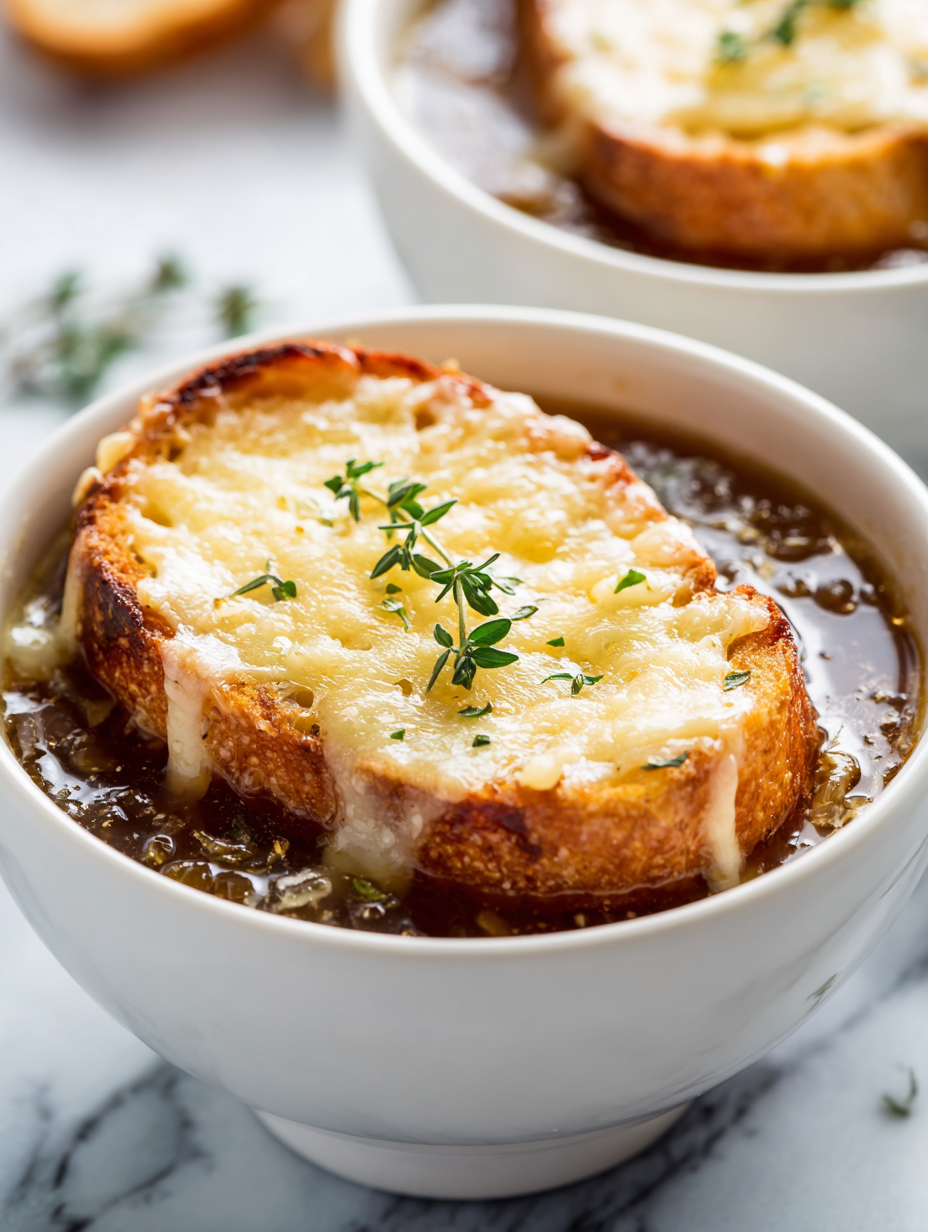
French Onion Soup
Ingredients
Equipment
Method
- Start by peeling and thinly slicing the onions into about 1/8-inch slices. Set aside.
- Heat a large heavy-bottomed pot over medium-low heat, then add the butter and olive oil. Once melted and fragrant, add the sliced onions and a pinch of salt. Cook slowly, stirring every 5–7 minutes, until the onions turn a deep golden amber and smell sweet, about 30-40 minutes.
- Add the minced garlic to the caramelized onions and cook for 1–2 minutes until fragrant, stirring constantly to prevent burning.
- Pour in the beef broth and add the thyme. Bring the mixture to a gentle simmer, uncovered, and cook for another 15–20 minutes, stirring occasionally. The broth should deepen in color and aroma.
- While the soup simmers, preheat your oven or toaster oven. Slice the baguette and toast until golden and crispy, about 8–10 minutes. Set aside.
- Ladle the hot soup into ovenproof bowls, then place a slice of toasted bread on top of each. Sprinkle generously with grated Gruyère cheese.
- Place the bowls on a baking sheet and broil in the oven until the cheese is bubbly, golden, and slightly crispy around the edges, about 2–3 minutes. Keep a close eye to prevent burning.
- Remove the bowls carefully from the oven, let rest for 2–3 minutes to cool slightly, then serve immediately, enjoying the bubbling, cheesy crust and rich onion broth.
Notes
Pro tips for perfect French Onion Soup
- Bolded mini-head: Caramelize slowly → Low and slow is key to unlocking natural sweetness without burning the onions.
- Bolded mini-head: Stir often → Keep onions moving to prevent sticking and ensure even browning, developing that rich, golden color.
- Bolded mini-head: Use deglazing → Add broth or wine to loosen flavorful browned bits from the pan, boosting depth.
- Bolded mini-head: Watch cheese closely → Broil until bubbly and golden, but remove promptly to avoid bitter, over-torched cheese.
- Bolded mini-head: Toast bread thoroughly → Achieve a crispy texture that holds up under the soup without turning soggy.
- Bolded mini-head: Adjust heat during caramelization → Keep it steady, avoid high heat that causes burning, and stir gently for even color.
- Bolded mini-head: Finish with fresh herbs → Add thyme or black pepper at the end for a bright, aromatic contrast to the rich broth.
Common mistakes and how to fix them
- FORGOT to watch onions—burnt edges ruin flavor. Fix by lowering heat and stirring often.
- DUMPED too much oil—soggy onions. Use just enough fat for glossy caramelization.
- OVER-TORCHED cheese—bitter taste. Broil until bubbly, then remove immediately.
- SKIPPED deglazing—lost flavor. Use a splash of broth or wine to lift browned bits.
Quick Fixes and Pantry Swaps
- If onions burn, splash in a bit of water to cool and loosen stuck bits.
- When soup tastes flat, add a splash of sherry or wine to brighten flavors.
- If cheese isn’t melting, broil for a minute longer, but watch closely.
- When bread sogginess occurs, toast slices longer for extra crunch before topping.
- Splash cold water on the pan if onions stick too much during caramelization.
Prep, store, and reheat tips
- Caramelized onions can be made up to 2 days ahead; store in an airtight container in the fridge, where they’ll develop a slightly sweeter, more concentrated aroma.
- Soup can be prepared up to 1 day in advance; keep it chilled in a sealed container, and expect the flavors to deepen slightly overnight, mellowing the sharpness.
- Reheat gently on the stove over low heat, stirring occasionally. The onions may thicken, so add a splash of broth or water to loosen the consistency and restore that rich, silky texture.
- For the cheese topping, toast bread slices fresh or day-old; re-broil briefly if needed to regain crispness, and expect the cheese to melt into a gooey, bubbling crust that’s best enjoyed immediately.
Top questions about French Onion Soup
1. How do I know when the onions are caramelized enough?
Look for onions that are deeply browned and sweet-smelling, with a soft, silky texture. The broth should be rich, dark, and flavorful, not watery. Cheese should be bubbly and golden, with a slight crisp edge. Bread should be toasted and crunchy, soaking up the broth without turning soggy. The soup is ready when all these elements come together in a bubbling, fragrant bowl.
2. What’s the best way to tell if the soup is done?
The broth is ready when it’s concentrated, dark, and aromatic, with a deep, savory smell. The onions should be soft and deeply golden. The cheese topping should be bubbling and golden, not burnt. The bread should be crispy and soaked with broth but intact. Taste and smell are your best guides—if it’s rich and fragrant, it’s done.
3. What equipment do I really need?
Use a heavy-bottomed pot for even heat and patience. Slice onions thinly for even caramelization. Cook onions slowly over low heat, stirring often, until deep amber. Deglaze with broth or wine to lift flavor. Broil the cheese until bubbly and golden, watching closely to prevent burning. Rest briefly before serving to avoid hot cheese burns.
4. Can I make this soup vegetarian or dairy-free?
To make this soup dairy-free, swap butter for olive oil — it won’t caramelize quite as deeply but still adds flavor. Use vegetable broth instead of beef for a vegetarian version, though it’s lighter. Replace traditional bread with gluten-free slices for a gluten-free option, but toast them thoroughly. For cheese, try nutritional yeast or vegan cheese for a non-dairy melt, though it lacks the same complexity. Use red onions if you want a sharper flavor and vibrant color, but yellow onions are classic for sweetness.
5. What makes the onions and cheese special in this dish?
Key ingredients like onions develop a sweet, rich aroma when cooked slowly; they turn silky and amber, adding depth. Gruyère cheese melts into a gooey, nutty topping that turns bubbly and golden under the broiler. The broth’s deep, savory smell signals fullness of flavor—watch for a dark, concentrated hue and a fragrant, umami aroma during simmering.
6. What common mistakes happen and how do I fix them?
FORGOT to watch the onions? They can burn if left unattended. Fix by lowering heat and stirring more frequently. DUMPED too much oil? Soggy onions result—use just enough for gloss. OVER-TORCHED cheese? It turns bitter—broil just until bubbly and golden, then remove. SKIPPED deglazing? You’ll lose flavor—add broth or wine to lift those tasty browned bits.
7. What are some tips for making the best French Onion Soup?
Slow caramelization is crucial: keep heat low and stir often. Use deglazing to deepen flavor—add broth or wine to loosen browned bits. Toast bread thoroughly to maintain crunch. Broil cheese just until bubbly—don’t walk away. Rest the soup briefly before serving to prevent burns and serve hot, bubbly, and aromatic. Adjust seasoning at the end for balance.
8. Can I make parts of this ahead of time?
You can prepare the caramelized onions and broth the day before. Store onions in an airtight container in the fridge for up to 2 days; they’ll develop a richer flavor. Reheat gently over low heat, adding a splash of broth if it thickens. Toast bread slices fresh or re-toast if needed. Broil the cheese topping just before serving to keep it bubbly and crispy, then serve immediately.
9. What quick fixes can I try if things go wrong?
When onions burn, splash in water to cool and loosen bits. If soup tastes dull, add a splash of sherry or wine to brighten. Over-browned cheese? Broil briefly and watch closely. Soggy bread? Toast longer or add extra crunch. If cheese isn’t melting, briefly broil for a few seconds — keep a close eye to prevent burning. Use pantry staples like Parmesan or Pecorino if Gruyère is unavailable for a different flavor twist.
10. What are the essential timing and temperature tips?
How long should I caramelize onions? About 30-40 minutes over low heat for deep flavor. For a richer broth, simmer for at least 20 minutes after adding the stock. Broil cheese until just bubbly, about 2-3 minutes, watching closely. Rest the soup for a couple of minutes before serving, so the cheese sets slightly and the broth cools enough to enjoy without burns. Taste and adjust seasoning before serving.
This dish is a reminder that patience in the kitchen rewards you with layers of flavor that linger long after the last spoonful. It’s a humble, honest recipe that’s perfect for slow mornings or cozy evenings, especially when the air turns cooler. No matter how many times I make it, I still find comfort in that rich, caramelized aroma filling the kitchen and the deep, soulful taste that follows.
In the end, French Onion Soup isn’t just about the ingredients—it’s about taking your time, trusting the process, and savoring every bubbling, cheesy bite. It’s a simple pleasure that feels just right for this season and reminds me to slow down and enjoy the little moments of culinary patience.

Hi, I’m Madison Greene, the creator behind Texture Obsessed. If you have ever fallen in love with the crunch of a perfectly toasted crust, the silkiness of a smooth custard, or the contrast between crispy and creamy in a single bite, then you already understand what inspires me.